

How the site of a failed well project became a community park and the start of something bigger
Tybee Island is a low-lying barrier island of around 3,000 residents just off the coast of Savannah, Georgia. Like other barrier islands, Tybee Island is highly vulnerable to coastal erosion, flooding, and sea level rise. For a community whose economy relies on tourism and whose only road to the mainland is U.S. 80, keeping the island accessible and its drinking water supply intact are essential.
Over the last 60 years, the city has proactively invested in resilience, from building dunes to push out the beach to elevating its homes and roads. But Solomon Park, Tybee Island’s newest green space, began as a land purchase with two goals unrelated to flood resilience: expand the city-owned campground to accommodate larger RVs and make room for a replacement drinking water well. Neither plan worked out.
From infrastructure to open space
In the 2010s, Tybee Island sought an alternative drinking water source to prevent saltwater intrusion and comply with state limits on pumping from the Upper Floridan aquifer. The city attempted to drill a deeper well into the Cretaceous Aquifer, but the well imploded during construction. To accommodate a replacement well and expand the RV park, which brings in substantial revenue, the city purchased an adjacent tract of land near its water treatment facility.
After the purchase, local environmentalists raised concerns: the land contained a largely intact oceanic forest and wildlife habitat. Developing it the way the city initially intended would ruin the ecosystem. Mayor West and the city listened.
“They were right,” Mayor West said. “We decided that we really shouldn’t do anything to develop this land.”
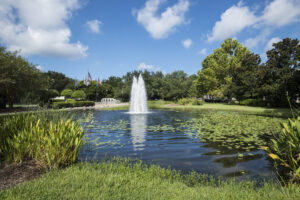
Solomon Avenue, which runs along the edge of the property, is being incorporated into a countywide bike-and-multi-purpose path connecting Tybee Island to downtown Savannah. The park sits adjacent to that corridor and now includes walking trails, a dog park, pollinator gardens, and small docks extending into the adjacent wetlands.
A vision for what comes next
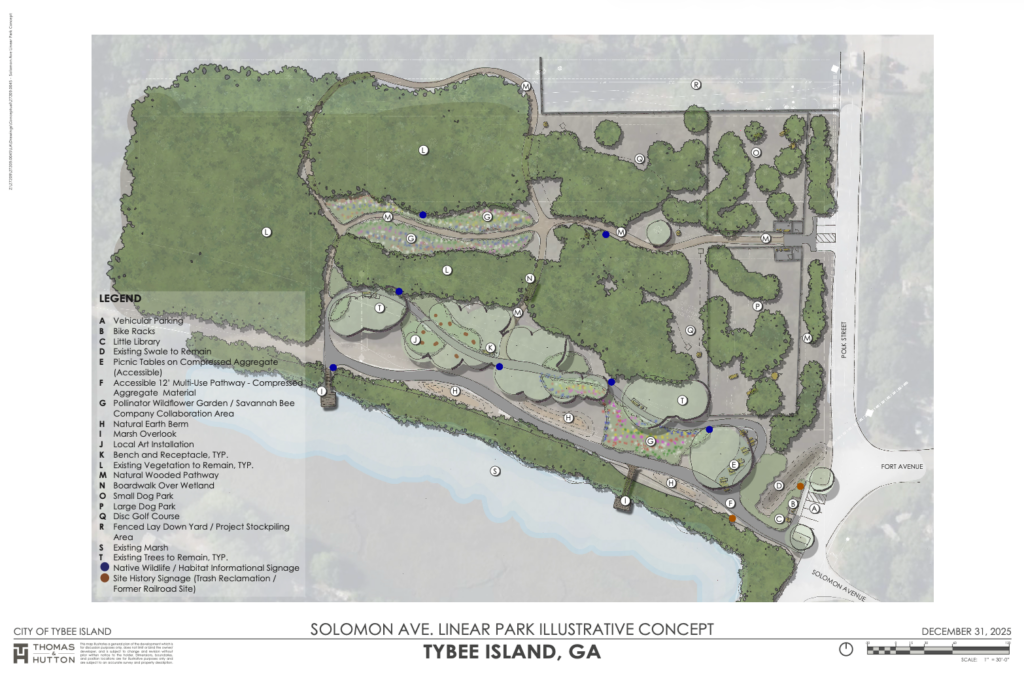
Illustrative concept of Solomon Ave Linear Park. Photo credit: Thomas & Hutton, City of Tybee Island
For Mayor West, Solomon Park is the first piece of something larger: a boardwalk running between the dunes of Tybee Island, connecting the park to the island’s pier and looping back along the beachfront. The route would link to the countywide multi-purpose path, creating a continuous, accessible coastal corridor.
“It’s a tremendous asset for the beach and the whole state,” Mayor West said. “Allowing people that wouldn’t normally be able to access the beach to be able to get up here on this boardwalk and be able to see the ocean, ride their bikes, and use their wheelchairs.”
Lessons for peer communities
- Take time with land-use decisions. Purchased land does not have to be developed immediately. When community input or environmental review surfaces better uses, pivoting early costs less than correcting mistakes later.
- Pair nature-based amenities with active transportation. Connecting parks and green spaces to multi-purpose paths increases community use and strengthens the case for sustained investment.
AFC supports communities like Tybee Island through funding navigation, peer learning, and connections to state and federal partners advancing coastal and green infrastructure.
“I dream too big, but I’m going to keep fighting for it,” said Mayor West.