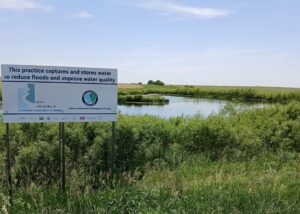


What does a field of relay intercropped rye and soybeans near Coggon, Iowa, have to do with a neighborhood in Cedar Rapids?
As it turns out, a lot.
AFC co-hosted a relay intercropping field day near Coggon alongside Iowa Learning Farms and Northeast Iowa RC&D to answer that very question. Relay intercropping is a type of multi-cropping in which a second crop is planted into the first crop before it’s harvested, so that the two crops overlap for part of their growing period. On June 3, farmers and landowners gathered to:
- Hear from a local farmer on what flood-smart agricultural practices, such as no-till, multi-cropping, and crop rotation, look like in reality.
- Watch Iowa Learning Farms’ Conservation Station rainfall simulator in action to see how soil health and farming practices affect infiltration and runoff.
- Learn about new flood-reduction research from Northeast Iowa RC&D.
- Hear from our Federal Policy Director Matthew Rowland on the benefits of flood-smart agricultural practices and how AFC is working with local partners and farmers to remove the barriers that stop widespread adoption.
The Bretz family farm implemented flood-smart agricultural practices over seven years ago. When they started, a bottle of water took about 45 minutes to absorb into the soil. Today, it takes 58 seconds. Multi-cropping has reduced soil erosion and runoff, improved water filtration, and lowered equipment, fuel, and chemical costs, boosting the farm’s bottom line in the process.
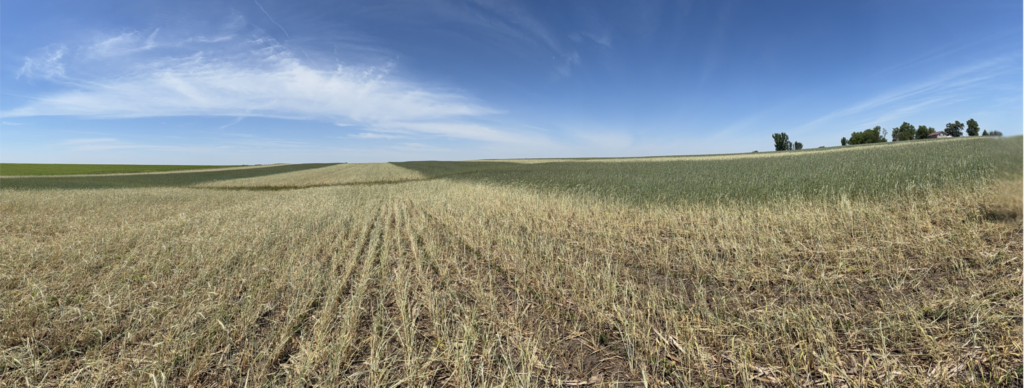
Multi-cropped field in Iowa
Despite those benefits, the barriers to scaling adoption are real. Equipment costs, rigid program requirements, and limited markets for secondary crops all slow the spread of multi-cropping. Our work focuses on removing those barriers so that more farmers can adopt multi-cropping and other flood-smart agricultural practices.
Why multi-cropping upstream matters for flooding
Multi-cropping is more than a farming strategy. It’s a flood management tool.
Our research with Iowa State University found that wider adoption of multi-cropping in the Cedar River Watershed could have prevented flooding in 26% of Cedar Rapids during the 2016 floods, protecting over 400 acres and nearly 500 homes and businesses. At the farm level, farmers have seen a 40-60% reduction in flood risk on their land and an average net profit of $50.90 per acre compared to growing only soybeans. The benefits don’t end there: multi-cropping also improves water quality and soil health. And when adopted at scale across a watershed, our research shows it can reduce flood risk by up to 30%, making it one of the most cost-effective tools available to protect communities and farmland from flooding.
Downstream connections
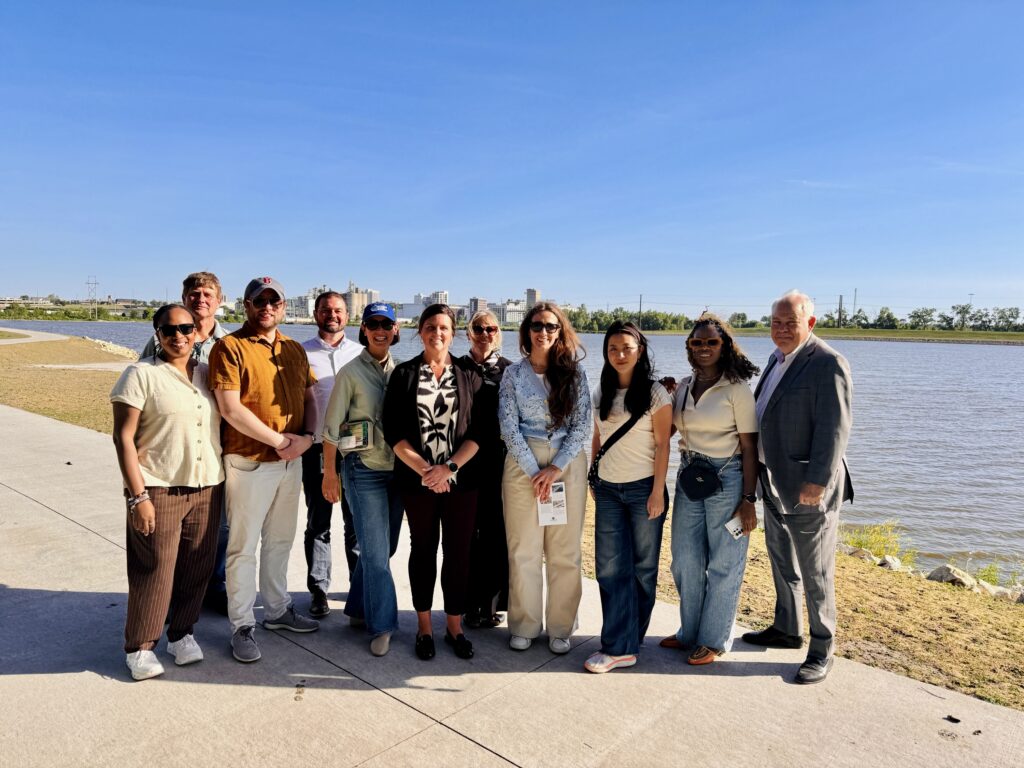
AFC team with Cedar Rapids city leaders touring flood-mitigation infrastructure
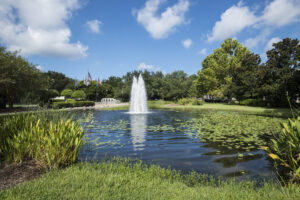
After the field day, AFC team members traveled to Cedar Rapids to tour flood mitigation projects with city leaders. Cedar Rapids experienced devastating floods in 2008 and 2016. In the years since, its leaders have committed not just to rebuilding, but to building back better: weaving together community amenities, nature-based protections, and flood-mitigation infrastructure. Our team toured the Riverside Park Detention Basin, Skatepark and Playground; McGrath Amphitheatre Levee and Restrooms; Cedar Lake Levee; and Czech Village, where the 12th Avenue SW Pump Station and a new reinforced floodwall anchor the National Czech & Slovak Museum & Library’s campus, provide space for outdoor activities, and protect the neighborhood. These are flood-mitigation projects that residents can use year-round, hiding flood protection in plain sight.
A watershed approach to resilience
Farmers upstream adopting multi-cropping in their fields. City officials downstream, building flood mitigation that doubles as public space. Different approaches to flood resilience, different places in the watershed, but the same goal: protecting Iowans from floods.
Watershed-scale resilience is the link between multi-cropped fields in Coggon and levees in Cedar Rapids. Connecting these distinct environments across the watershed, advocating for policies that strengthen those links, and justifying cross-sector investment in flood mitigation is how AFC is working to advance the resilience of communities in Iowa and throughout the country.