

AFC hosts leaders at North Carolina summit on infrastructure and flooding

The American Flood Coalition last week joined experts, agency officials, and local, state, and federal leaders in Greenville, North Carolina, for the third annual Water Adaptations to Ensure Regional Success (WATERS) Summit on flooding and sea level rise. 

The bipartisan summit, hosted by Federal Champions Greg Murphy (R-NC) and Rep. David Rouzer (R-NC), highlighted the massive flooding challenges faced by North Carolina, the state’s strategy to tackle these challenges, and the significant work by local leaders to put federal funds toward flood-resilient infrastructure.

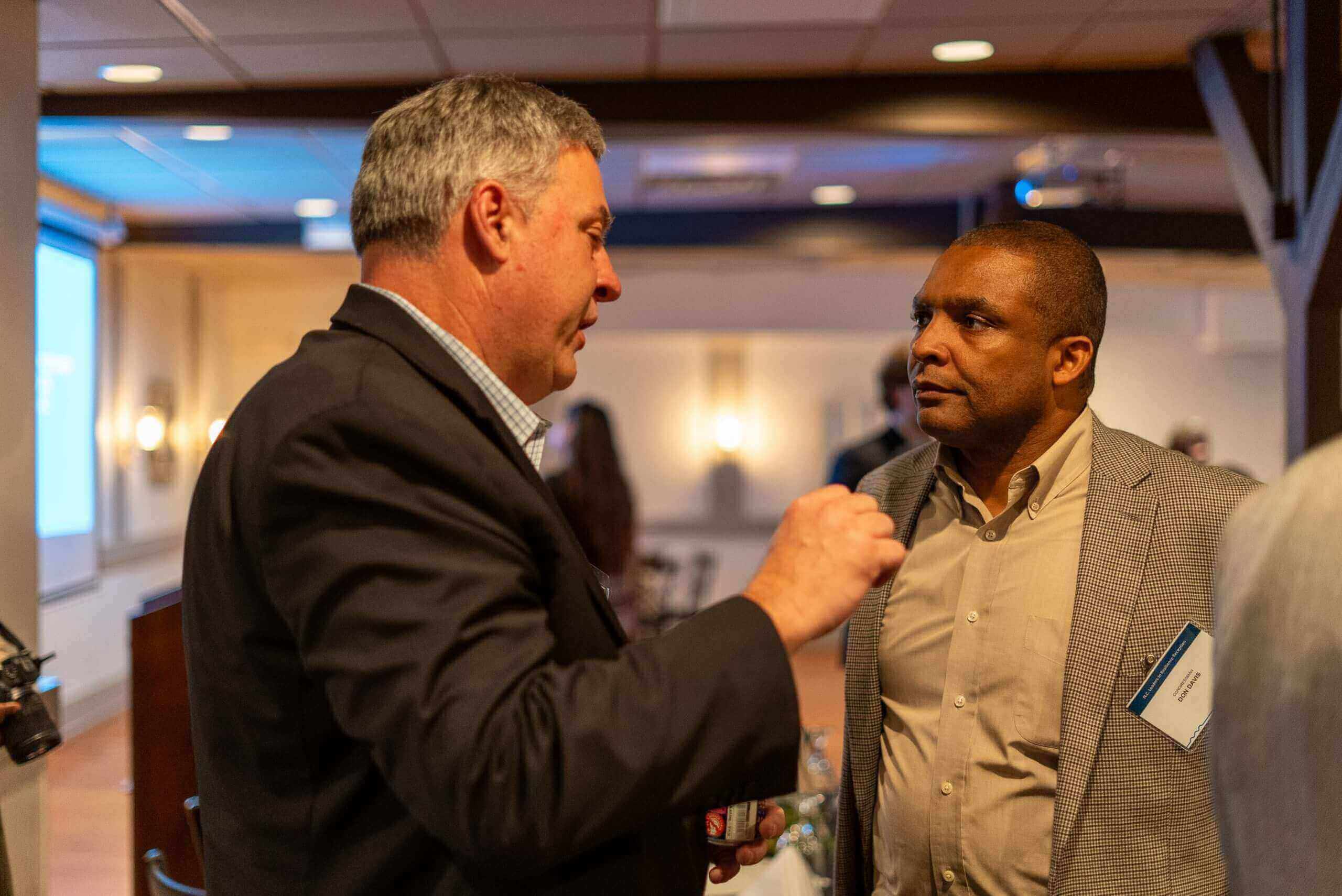
On the eve of the summit, AFC hosted a reception with 60 attendees from over 20 communities in North Carolina. Also attending was Federal Champion Rep. Don Davis (D-NC), as well as senior staff from the offices of Sen. Ted Budd (R-NC) and Federal Champion Sen. Thom Tillis (R-NC).
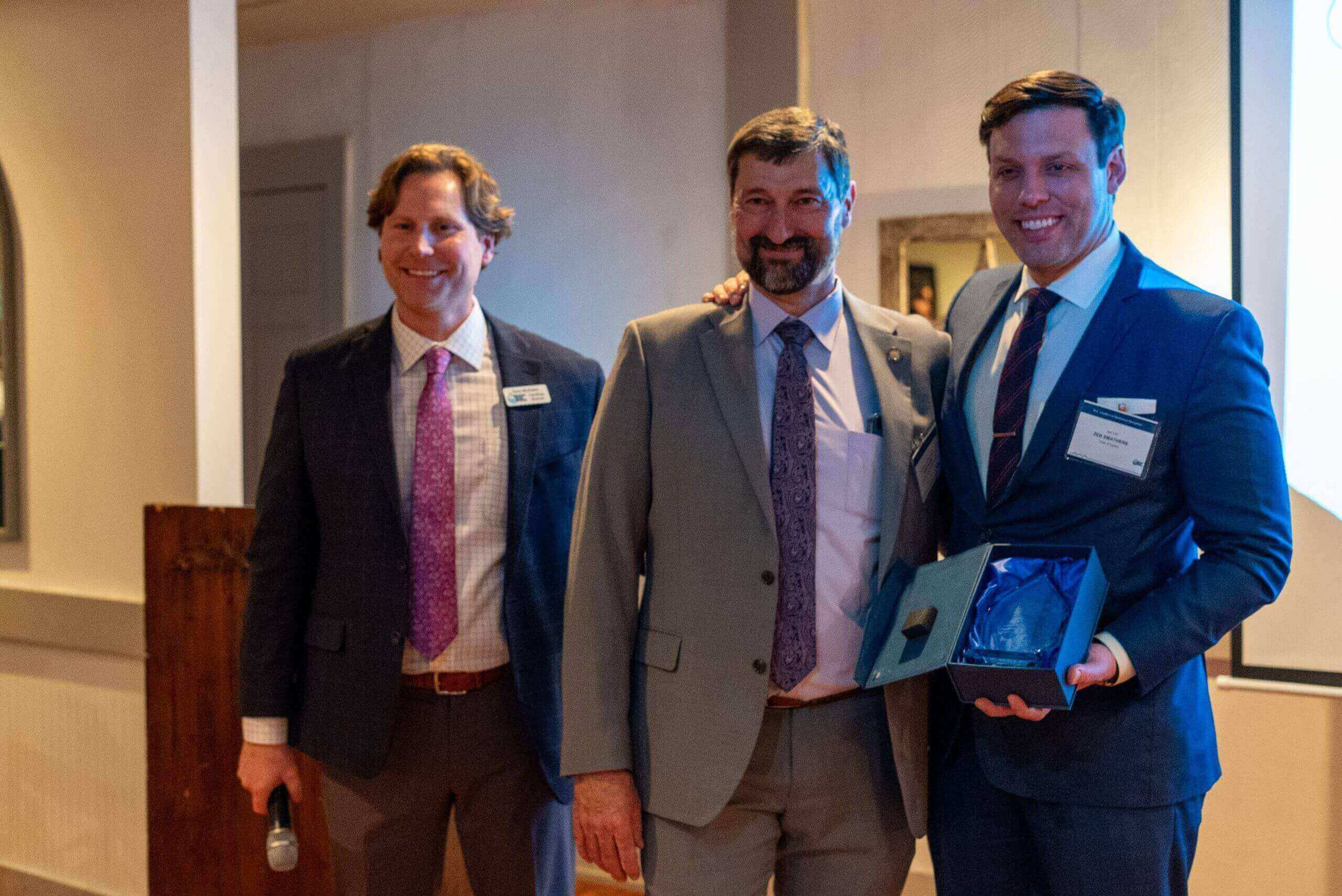
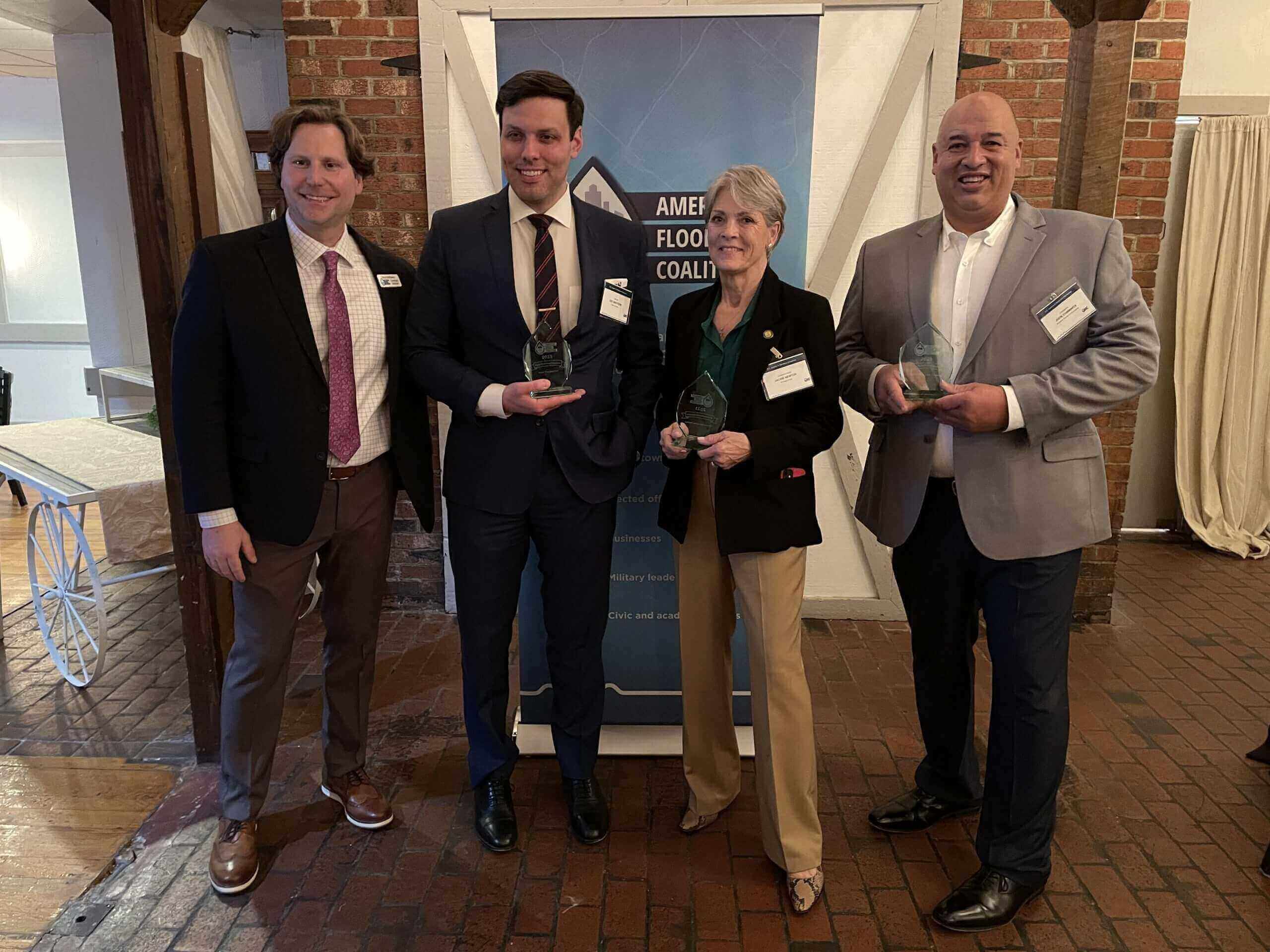
three men posing for photo
Left to right: AFC Carolinas Director Tony McEwen, State Rep. Mark Pless, and Canton Mayor Zeb Smathers.

The summit and reception marked another step forward in collaboration between local, state, and federal officials on flooding. Specifically, local leaders discussed ways to advance state and federal investments in flood-resilient infrastructure and planning efforts. 

“Communities across North Carolina are particularly vulnerable to flooding and sea level rise,” said AFC Carolinas Director Tony McEwen. “This summit is an opportunity for leaders from every level of government to come together to find effective, long-lasting solutions to these mounting challenges.” 

As the only organization working on flooding across the local, state, and federal levels, AFC held its reception to connect dozens of local leaders with state and federal elected officials, elevating the concerns and solutions of local leaders on the front lines of flooding. 

At the reception, attendees heard from AFC Chairman of the Board Jay Faison, as well as Representatives Greg Murphy, David Rouzer, and Don Davis. Speakers also included state and  local leaders whose districts and communities face significant flooding challenges. 
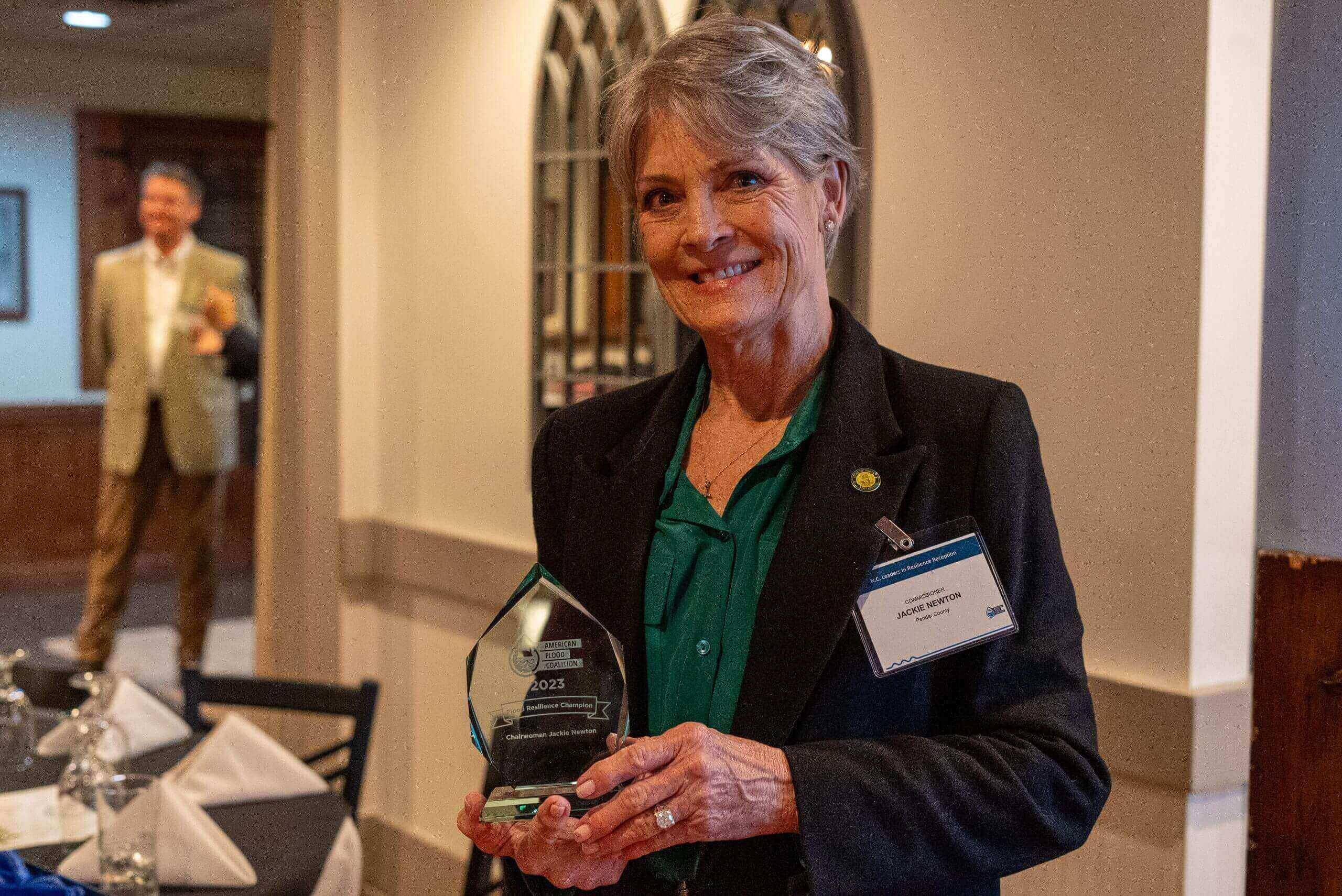
woman holding an award
AFC Member and Pender County Commissioner Jackie Newton.

AFC member and State Rep. Mark Pless described how the mountainous terrain of Appalachia exacerbates flooding and can wash away entire towns. And on the other side of the state, State Rep. Timothy Reeder, representing the Pitt County legislative delegation, described the urgency felt on flooding in his region. 

Chairman of the Robeson County Board of Commissioners John Cummings, who is also an AFC member, spoke about how flooding ignores municipal boundaries. And AFC member and Pender County Commissioner Jackie Newton spoke to the need for federal funds to alleviate flooding in her county. 

From the western part of the state, AFC member and Canton Mayor Zeb Smathers spoke about the destruction of flooding felt firsthand: In 2021, Tropical Storm Fred swept through his small mountain town, wiping out nearly all its public infrastructure and killing six people. 

“There are more Cantons than there are Charlottes, but we’re all affected by flooding the same,” said Smathers.

The reception and summit gave local, state, and federal leaders the opportunity to reflect on  common challenges, and work together to find solutions to flooding and sea level rise. AFC was proud to convene so many decision makers on this crucial issue at its reception and looks forward to advancing flooding priorities across North Carolina in 2024 and beyond. 

More photos from the reception
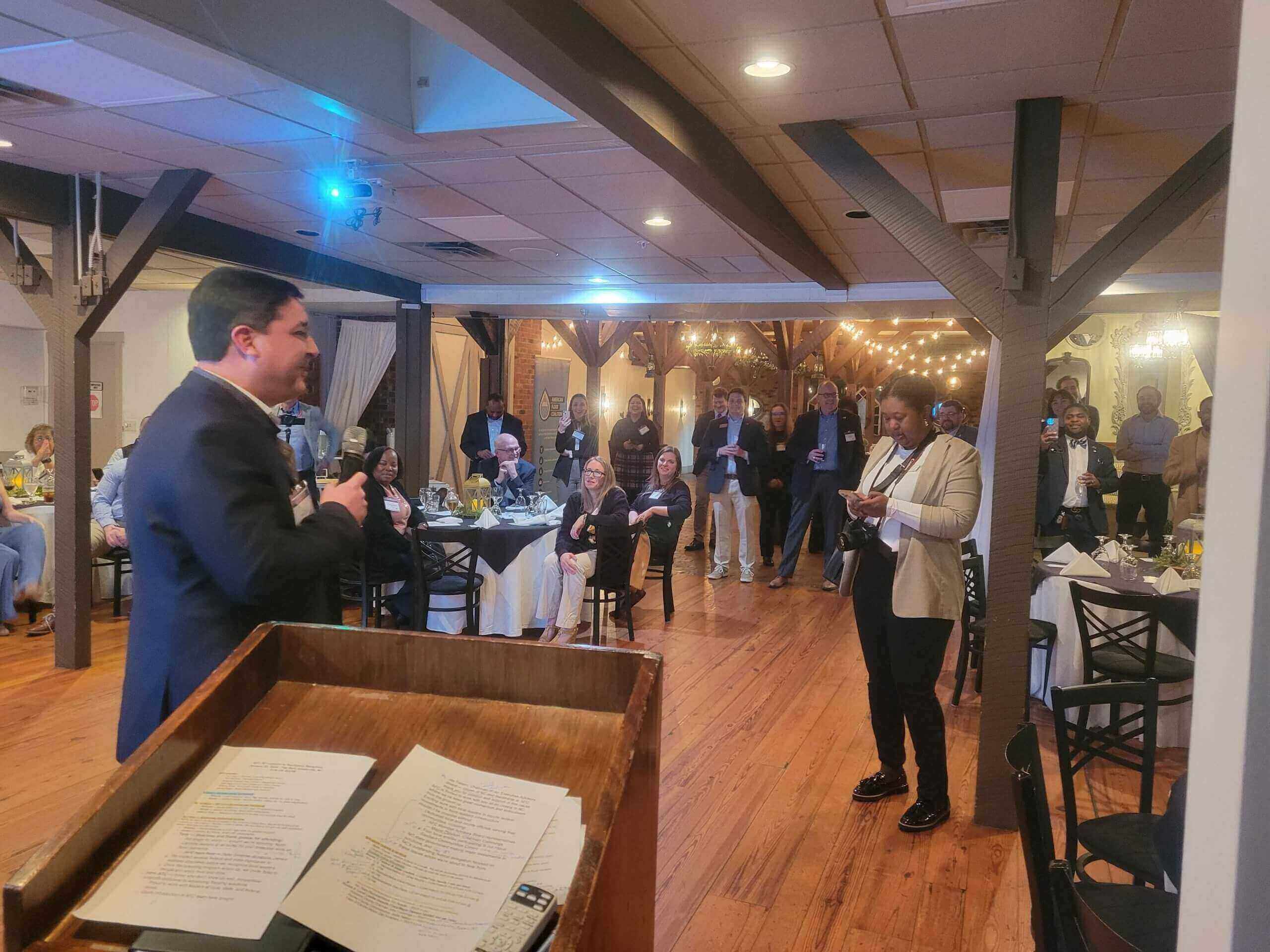
man in front of podium speaks to crowd
AFC Federal Champion Rep. David Rouzer (R-NC) speaks at the reception.
man talking to woman near bar
New Bern City Planner Matt Schelly (left) with AFC Government Relations & Policy Director Julie Seger.
people posing with awards
From left to right: AFC Carolinas Director Tony McEwen with three AFC members: Canton Mayor Zeb Smathers, Pender County Commissioner Jackie Newton, and Chairman of the Robeson County Board of Commissioners John Cummings. 
three people talking in a circle
AFC Member and Canton Mayor Zeb Smathers (left) and AFC Advisory Board Member and Burgaw Mayor Olivia Dawson (right).
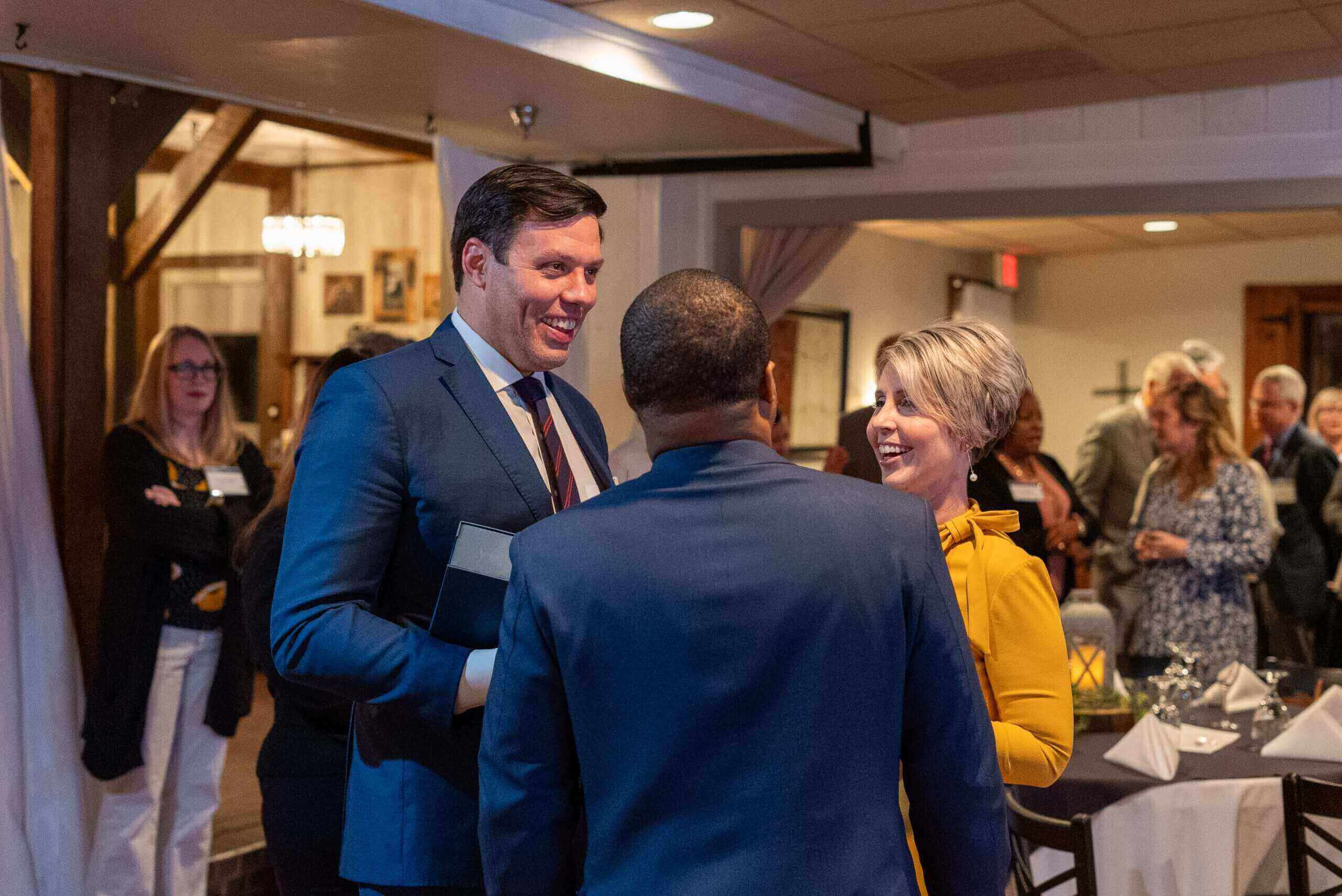
Kenneth M. Halanych (left), executive director of UNCW’s Center for Marine Science, with Federal Champion Rep. Don Davis.
Facebook
X
LinkedIn

Recent News

Botetourt County, Virginia Deploys an Impact-Based Flood Warning System

Mayor Brad Cavanagh Advances Flood Protection and Economic Stability in Dubuque, Iowa

Mayor Pro Tem Andrea J. Barefield Leads Equitable Flood-Smart Growth in Waco, Texas

Join Our Newsletter

Name(Required)

Help Me Choose

Which characteristics is your community looking for in funding opportunities?

Disaster declaration
A Presidential Disaster Declaration unlocks a suite of federal programs that assist local governments with disaster recovery. This is a good filter for communities included in recent Disaster Declarations related to flooding.
Nature-based solutions
The program has a strong focus on providing assistance to promote a healthy ecosystem as a critical defense against flooding impacts. Eligible activities may include floodplain restoration, environmental stewardship, projects that use natural features to mitigate erosion, and living shorelines.
Encourages public-private partnerships
The program encourages or requires collaboration between government entities and stakeholders, including the private sector, to fund, develop, or implement projects.
Offers rolling deadlines
The program accepts applications on an ongoing basis with no fixed deadline.

Is your project in the planning, design, or construction phase?

Planning
The gathering of data and information regarding the extent and impacts of flooding. Eligible activities may include data acquisition, risk assessment, and environmental analysis.
Design & scoping
Covers pre-construction activities, such as defining project scope, developing technical designs, and securing funding to prepare for implementation.
Construction & implementation
Involves carrying out flood resilience projects, including building infrastructure and deploying solutions to reduce flood risks.

Are you looking for grants, loans, or technical assistance for your project?

Funding (grants)
A monetary award that does not need to be repaid. Many federal grants are reimbursable, meaning recipients must cover project costs upfront and then request reimbursement from the government.
Financing (loans)
A government-issued loan that must be repaid. These loans typically provide funding upfront, helping communities cover project costs before repayment begins.
Technical assistance
Assistance from the government in the form of services — such as project planning, engineering and design support, data analysis, training, capacity building, or collaboration through a cooperative agreement — instead of direct funding.

Some programs provide extra support for specific project types or communities. Do any of these apply to your project?

Small or rural communities
Programs that set aside funding, offer loan forgiveness, or adjust cost share requirements for communities with smaller populations.
Small or low-cost projects
Programs that offer reduced requirements for smaller projects, such as waived cost-sharing or exemptions from benefit-cost analysis.
Regional or watershed focus
Programs that support projects that take a watershed management approach or address flooding at a regional scale, requiring coordination beyond a single town or community.
Tribal communities
Programs that dedicate resources or adjust cost share requirements specifically for tribal governments or organizations.