

State leaders from across US attend AFC workshop on flood resilience

States play a critical role in building flood resilience. They receive and allocate funding, influence local planning across jurisdictional boundaries, and can manage flood risk at the watershed level. 

Despite this role in building flood resilience, however, state leaders face many obstacles in coordinating across state and federal agencies and lack effective channels to communicate with peers in other states about flooding. 

That’s why the American Flood Coalition and the Aspen Institute Energy and Environment Program this month brought together 15 senior state resilience and water leaders in Washington, D.C., for a three-day workshop centered on state-level flood resilience. 

As a continuation of convenings in Aspen, Colorado, and Miami, Florida, the event provided space for leaders to build on past conversations, exchange new ideas, and apply lessons learned from others to their own states. Leaders came from 15 states, each with unique geographic and political identities. 

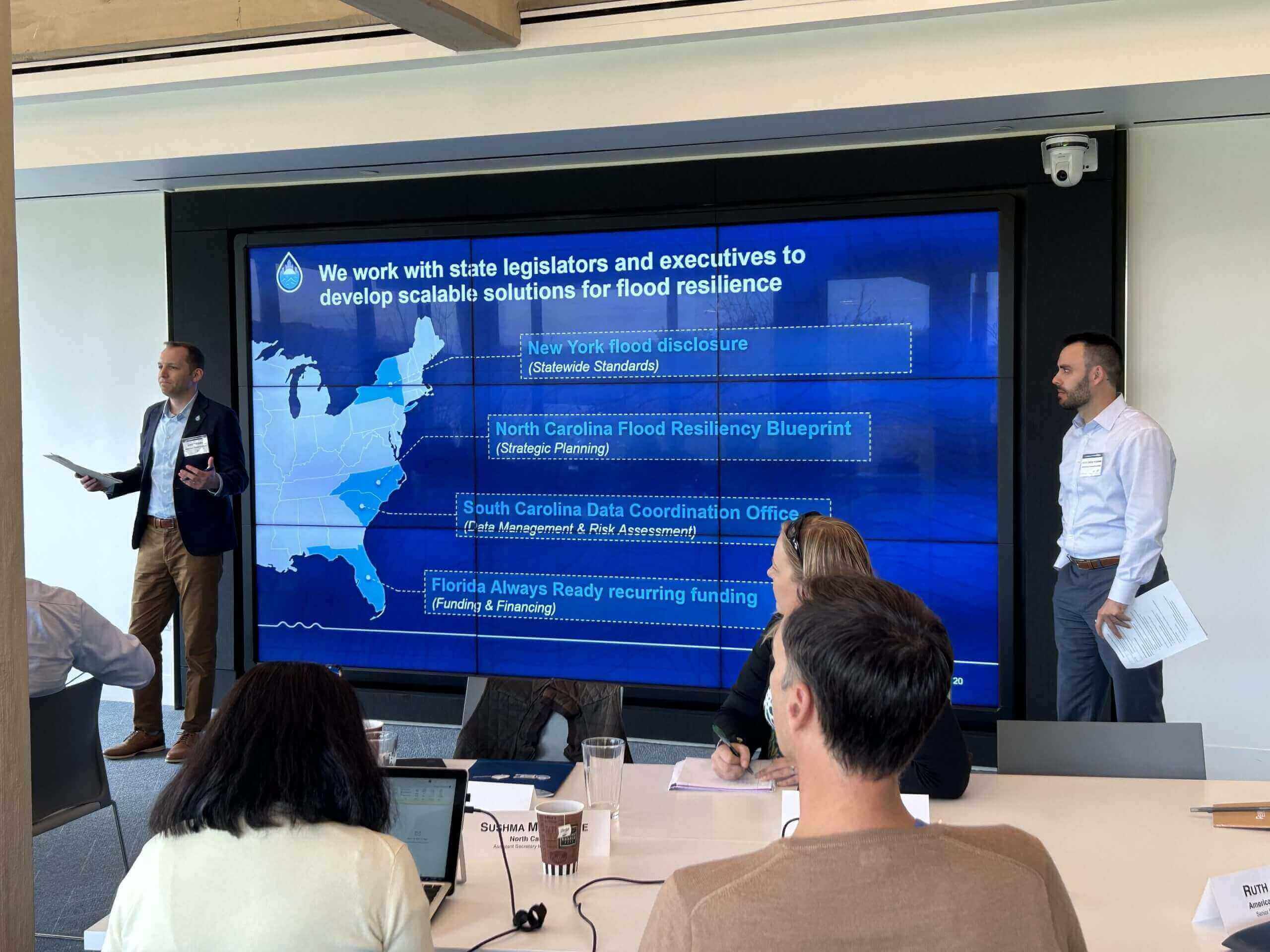
AFC Flood Planning Director Jack Krolikowski speaks at the event.

Over the three days, the American Flood Coalition facilitated discussion sessions on topics like regional watershed approaches to flood resilience, federal flood resilience programs, and state best practices. Through these discussions, AFC created a space for state leaders to share successes, as well as current challenges.

“How every state is approaching [flood resilience] is different,” one participant noted. “It’s really great to get to come together with other states and hear what everyone is doing, so I can hear new ideas and borrow things from what other states have already done.”

State leaders and AFC representatives also discussed elements of AFC’s State Flood Resilience Framework. Developed with input from experts across the country, the Framework outlines how states can systematically approach flood policy, while still accounting for their state’s unique environment.

“[We need to decide] are we nibbling around the edges, or are we attacking the root of the problem?” said another participant. “Going at the root requires fundamental shifts.”

AFC Executive Director Melissa Roberts.

During the event, state leaders shared experiences with representatives from federal agencies, including the Federal Emergency Management Agency, National Oceanic and Atmospheric Administration, and the White House Office of Science and Technology Policy. 

As an organization that works at the local level, across states, and with the federal government, the American Flood Coalition was proud to facilitate conversations at a time when the federal-state relationship is so important to carrying out the bipartisan infrastructure law.

AFC is committed to continuing this work with state leaders and supporting them as they protect communities from the impacts of flooding. 

“These events are so helpful to me,” said one participant. “I don’t often get to be in a room in person with a group like this.”

More photos from the event
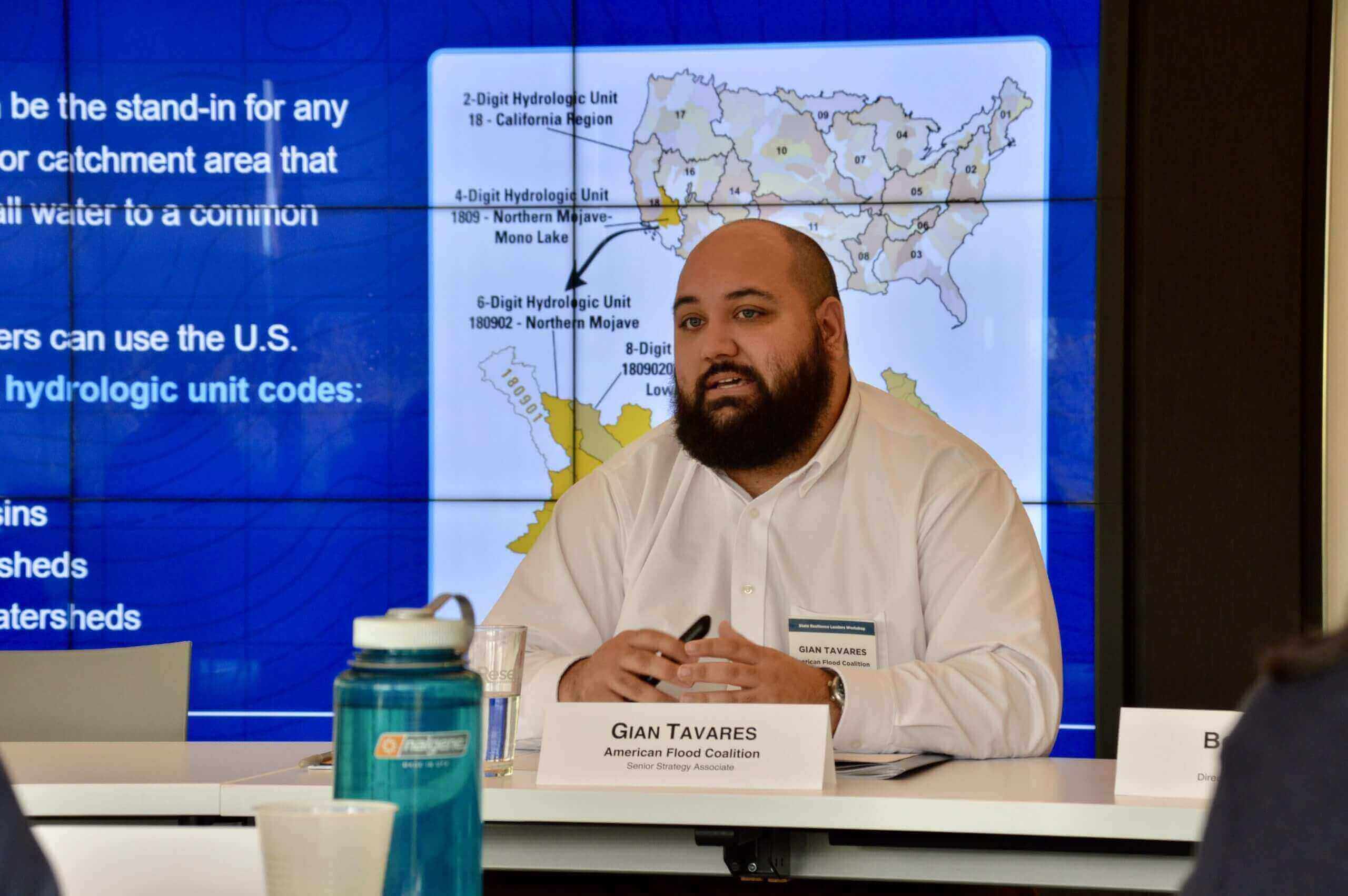
AFC Senior Strategy Associate Gian Tavares.
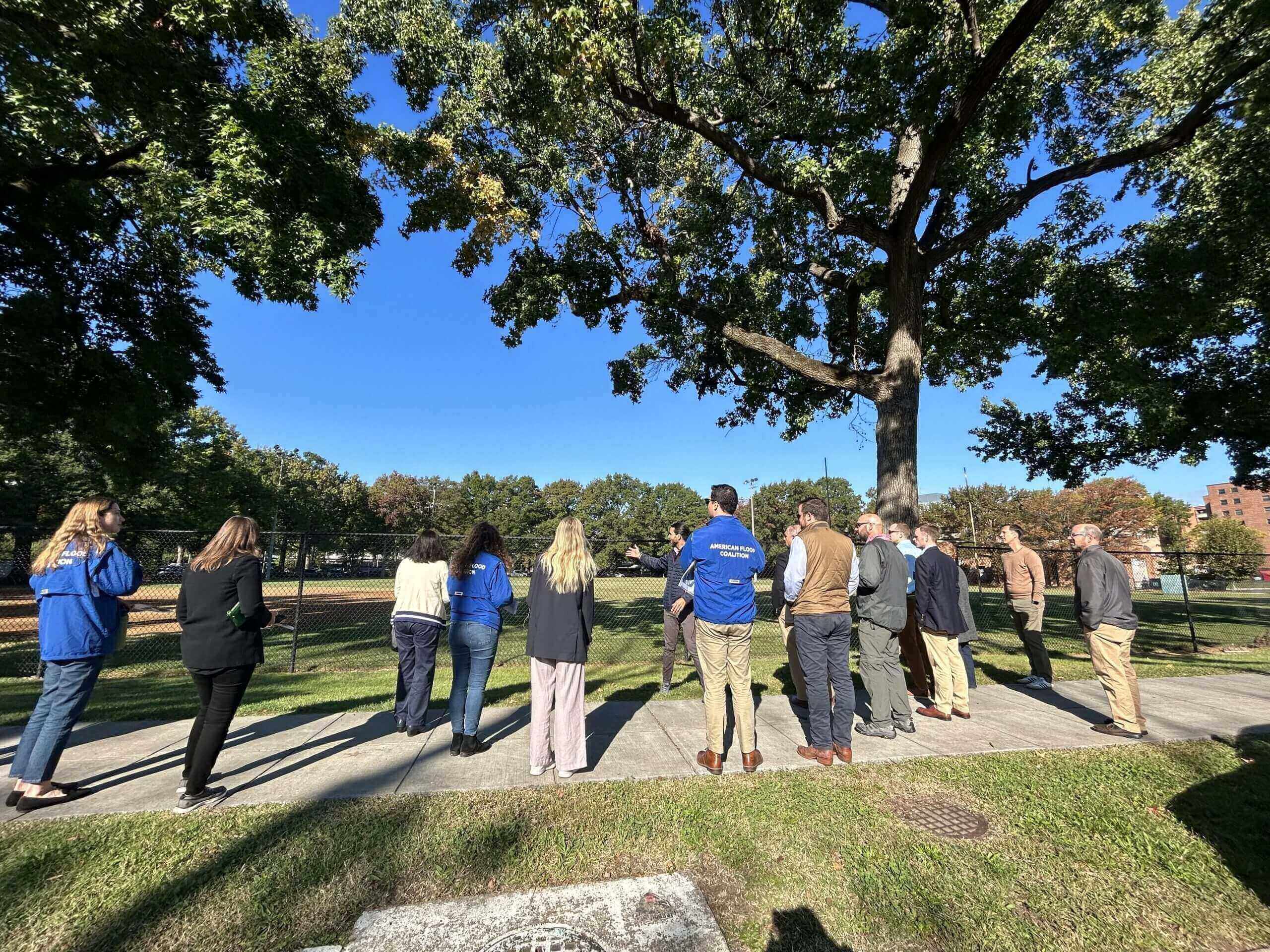
Attendees on a walking tour of redevelopment sites in southwest Washington, D.C.
AFC State Programs Director Brian Paro (left) and AFC Flood Planning Director Jack Krolikowski present at the event.
Facebook
X
LinkedIn

Recent News

One year after Helene: Western North Carolina leaders highlight ongoing need for resources

The Carolinas and Florida advance flood resilience during sessions

Building resilience with flood-smart agriculture

Join Our Newsletter

Name(Required)

Help Me Choose

Which characteristics is your community looking for in funding opportunities?

Disaster declaration
A Presidential Disaster Declaration unlocks a suite of federal programs that assist local governments with disaster recovery. This is a good filter for communities included in recent Disaster Declarations related to flooding.
Nature-based solutions
The program has a strong focus on providing assistance to promote a healthy ecosystem as a critical defense against flooding impacts. Eligible activities may include floodplain restoration, environmental stewardship, projects that use natural features to mitigate erosion, and living shorelines.
Encourages public-private partnerships
The program encourages or requires collaboration between government entities and stakeholders, including the private sector, to fund, develop, or implement projects.
Offers rolling deadlines
The program accepts applications on an ongoing basis with no fixed deadline.

Is your project in the planning, design, or construction phase?

Planning
The gathering of data and information regarding the extent and impacts of flooding. Eligible activities may include data acquisition, risk assessment, and environmental analysis.
Design & scoping
Covers pre-construction activities, such as defining project scope, developing technical designs, and securing funding to prepare for implementation.
Construction & implementation
Involves carrying out flood resilience projects, including building infrastructure and deploying solutions to reduce flood risks.

Are you looking for grants, loans, or technical assistance for your project?

Funding (grants)
A monetary award that does not need to be repaid. Many federal grants are reimbursable, meaning recipients must cover project costs upfront and then request reimbursement from the government.
Financing (loans)
A government-issued loan that must be repaid. These loans typically provide funding upfront, helping communities cover project costs before repayment begins.
Technical assistance
Assistance from the government in the form of services — such as project planning, engineering and design support, data analysis, training, capacity building, or collaboration through a cooperative agreement — instead of direct funding.

Some programs provide extra support for specific project types or communities. Do any of these apply to your project?

Small or rural communities
Programs that set aside funding, offer loan forgiveness, or adjust cost share requirements for communities with smaller populations.
Small or low-cost projects
Programs that offer reduced requirements for smaller projects, such as waived cost-sharing or exemptions from benefit-cost analysis.
Regional or watershed focus
Programs that support projects that take a watershed management approach or address flooding at a regional scale, requiring coordination beyond a single town or community.
Tribal communities
Programs that dedicate resources or adjust cost share requirements specifically for tribal governments or organizations.