
Bay Harbor Islands

Miami-Dade County, Florida

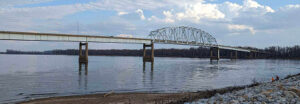
Bay Harbor Islands is a town in Miami-Dade County, Florida, with a population of around 6,000 people. Known as the “best kept secret on the water,” Bay Harbor is a small, quaint community separated from the mainland by Biscayne Bay, over which the land masses are connected via the Broad Causeway.

Visitors to Bay Harbor Islands are pleasantly surprised to discover a quaint and elegant two block business district on Kane Concourse. Along the beautifully landscaped Concourse visitors find great shopping, fine dining, professional offices and art. On the easternmost median, Robert Indiana’s “Love” sculpture adorns the median nestled amongst the beautiful and majestic palms. On the westernmost median, Romero Britto’s “Heart” sculpture shines brightly to capture the essence of the beautiful islands that make up the Town.

The city’s idyllic location lies within an area that is vulnerable to flooding. In addition to keeping residents informed about flood risks and offering resources, Bay Harbor benefits from the county’s efforts in combating the ever-increasing impacts of sea level rise. Miami-Dade County is part of the Southeast Florida Regional Climate Change Compact and is addressing climate change and sea level rise through a multi-faceted approach of mitigation and adaptation, as well as through its participation in the Resilient 305 network.

Join Our Newsletter

Name(Required)

Help Me Choose

Which characteristics is your community looking for in funding opportunities?

Disaster declaration
A Presidential Disaster Declaration unlocks a suite of federal programs that assist local governments with disaster recovery. This is a good filter for communities included in recent Disaster Declarations related to flooding.
Nature-based solutions
The program has a strong focus on providing assistance to promote a healthy ecosystem as a critical defense against flooding impacts. Eligible activities may include floodplain restoration, environmental stewardship, projects that use natural features to mitigate erosion, and living shorelines.
Encourages public-private partnerships
The program encourages or requires collaboration between government entities and stakeholders, including the private sector, to fund, develop, or implement projects.
Offers rolling deadlines
The program accepts applications on an ongoing basis with no fixed deadline.

Is your project in the planning, design, or construction phase?

Planning
The gathering of data and information regarding the extent and impacts of flooding. Eligible activities may include data acquisition, risk assessment, and environmental analysis.
Design & scoping
Covers pre-construction activities, such as defining project scope, developing technical designs, and securing funding to prepare for implementation.
Construction & implementation
Involves carrying out flood resilience projects, including building infrastructure and deploying solutions to reduce flood risks.

Are you looking for grants, loans, or technical assistance for your project?

Funding (grants)
A monetary award that does not need to be repaid. Many federal grants are reimbursable, meaning recipients must cover project costs upfront and then request reimbursement from the government.
Financing (loans)
A government-issued loan that must be repaid. These loans typically provide funding upfront, helping communities cover project costs before repayment begins.
Technical assistance
Assistance from the government in the form of services — such as project planning, engineering and design support, data analysis, training, capacity building, or collaboration through a cooperative agreement — instead of direct funding.

Some programs provide extra support for specific project types or communities. Do any of these apply to your project?

Small or rural communities
Programs that set aside funding, offer loan forgiveness, or adjust cost share requirements for communities with smaller populations.
Small or low-cost projects
Programs that offer reduced requirements for smaller projects, such as waived cost-sharing or exemptions from benefit-cost analysis.
Regional or watershed focus
Programs that support projects that take a watershed management approach or address flooding at a regional scale, requiring coordination beyond a single town or community.
Tribal communities
Programs that dedicate resources or adjust cost share requirements specifically for tribal governments or organizations.