

January 10, 2022
—
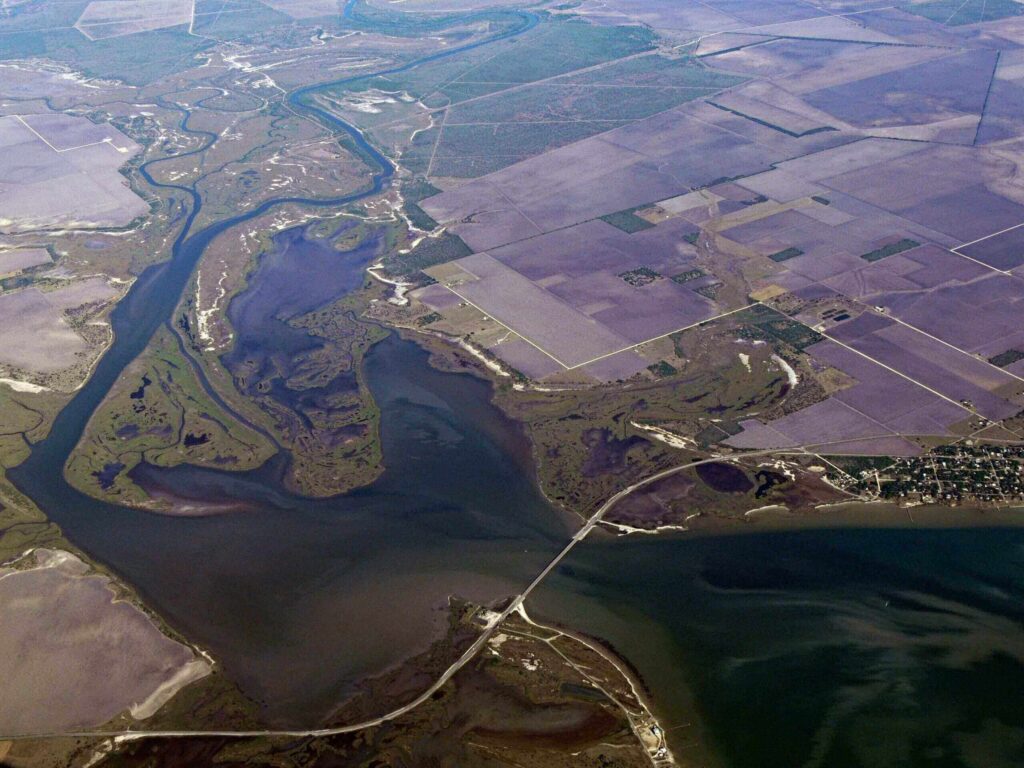
Texas’s Coastal Bend is no stranger to flooding and sea level rise. In the last few years alone, the region has been impacted by storms like Hurricane Harvey, Hurricane Hanna, and Tropical Storm Nicholas. These storms have led to damaging storm surge and significant rainfall throughout the region.
To build resilience in the face of impacts like these, the Coastal Bend Council of Governments and the Harte Research Institute at Texas A&M University-Corpus Christi formed the Regional Resilience Partnership. The Partnership works with the 11 counties and 33 cities in Texas’s Coastal Bend region, an area covering over 10,000 square miles — nearly the size of Massachusetts — and comprising nearly 600,000 people.
This blog post highlights AFC’s work with the Regional Resilience Partnership, scalable resilience strategies, and the importance of regional collaboration.
Regional collaboration in action
Last summer, the American Flood Coalition partnered with the Regional Resilience Partnership, along with other organizations, to host a leadership training program. Over three sessions, elected officials, municipal staff, and leaders from academic institutions worked on ways to support resilience in Texas’s Coastal Bend region and collaborate locally and with experts from across the country.
The training program allowed local leaders in Texas to share knowledge and develop action plans for tackling flooding regionally. The program also offered a roadmap for other areas looking to build regional resilience — not just in Texas, but also around the country.
Key themes from training sessions
Rising seas and stronger storms threaten communities from coast to coast. When developing plans for before, during, and after floods, leaders should keep certain things in mind. Below are some recommendations that emerged from the training program:
- Understand current and future risk. Communities should use new data and information to better understand how shocks and stressors from floods affect daily life (e.g., commutes and access to goods and services).
- Focus on the who. Communities should know the areas that are most vulnerable to flooding and ensure these areas can access resources they need during recovery.
- Encourage interdepartmental collaboration. Sharing resources and information across departments can maximize limited resources and create other benefits.
- Invest in regional coordination, especially in rural areas. Regional resilience efforts leverage resources and capacity across jurisdictions. This jumpstarts regional scale projects that benefit many communities.
In addition to planning and prioritizing risk, communities must also understand social vulnerability. To do this, communities need accurate, accessible information.
4 resilience strategies for communities of all sizes
Communities have dozens of ways to adapt to flooding and sea level rise. During the sessions, leaders presented four unique strategies for resilience from other regions that have multiple benefits and can scale to fit a community’s unique needs:
- Good Neighbor Stormwater Park in North Miami, Florida. The Good Neighbor Stormwater Park is not only a space for residents to enjoy — it also helps prevent floods. While redesigning the park, leaders engaged directly with the community to better understand local needs, while also increasing public awareness on flooding.
- Up-to-date data in Horry County, South Carolina. For a community to understand its flood risk, it needs accurate, accessible data. Horry County took FEMA flood zone data, along with data on historic flood exposure, to create the “Map your Move” tool. The tool allows current and prospective homeowners and renters to understand a property’s vulnerability to flooding, hurricanes, and other disasters. Outside of Horry County, homeowners and renters can use First Street Foundation’s Flood Factor tool to see a property’s flood risk.
- Wetlands Watch land-use pilots in Hampton Roads, Virginia. Wetlands Watch is working on two pilot projects that focus on resilient land-use strategies. These projects combine buyouts, conservation, and market-based tools to reduce flood risk, while bringing added benefits to landowners and communities.
- New development standards in Norfolk, Virginia. Like Horry County, Norfolk has sought to make data and information more accessible. The city implemented a resilience quotient system (RQS) where developers earn points for adopting resilience measures that reduce flood risk and manage stormwater. Norfolk also participates in FEMA’s Community Rating System to lower National Flood Insurance Program premiums for residents.
For more on these strategies and many other approaches to flooding and sea level rise, check out AFC’s Adaptation for All guide.
Funding opportunities
With so many state and federal grants available, leaders may struggle to find grants that are right for their communities. Several resources can help community leaders navigate this complicated system, including:
- AFC’s Flood Funding Finder
- Texas A&M AgriLife Extension Service’s Resilient Texas
- Flood Information Clearinghouse
- Texas Water Foundation’s Water Infrastructure Resource and Funding Guide.
Next steps
With new connections and ideas, leaders in the Coastal Bend will continue developing local action strategies for building resilience. Some strategies include how to better communicate flood risk to communities, identify funding sources and partners, and explore projects that reduce flood risk.
Now, leaders are looking toward future projects, as results from the training sessions were integrated into two new funding proposals to build local resilience.
“The strength of collaboration — both regionally but also nationally with partners such as the American Flood Coalition — was made clear during our training,” said Katya Wowk, Ph.D., co-lead of the Regional Resilience Partnership. “Through continued discussion over just a few short months, we could scope local ideas, integrate those ideas into regional projects, and then submit fully formed projects to identified funders, all while building relationships with experts facing similar challenges across the country.”
The Regional Resilience Partnership shows how regional resilience groups can bring value to an area. By discussing resilience with neighboring communities and developing action strategies, the 11 counties and 33 cities in the Coastal Bend are better prepared for stronger storms and rising seas.
For more on setting up a regional resilience group, check out AFC’s resource Beyond Boundaries: Steps to Build Regional Resilience Partnerships.
Sessions included presentations from Colleen McHugh, The Water Institute of the Gulf; Dr. Rob Young, Western Carolina University; Debbie Love and Amanda Murray, the City of North Miami; Skip Stiles, Wetlands Watch; and Matthew Simons, City of Norfolk.
This post was authored by Liz Cassin, Senior Outreach Associate at the American Flood Coalition.