


When the heartland of America is flooded, it’s not just communities that get upended — so, too, does a vital source of our food.
As the country’s largest producer of corn, Iowa is at the heart of America’s breadbasket. It’s also a state that has recently experienced more intense and frequent flooding: Particularly brutal floods in 2019 left millions of acres unplanted, causing the region to lose $6 billion in crop sales alone.
It’s clear that flooding affects agriculture. But too often we ignore how we can use agricultural practices to reduce the risk of flooding.
At the American Flood Coalition, we know that flood policy is agricultural policy, and vice versa. That’s why we’re bringing together partners from agriculture and adaptation sectors to work toward a common solution: protecting communities and farmland from flooding. Our recent site visit in Guthrie Center, Iowa, did just that.
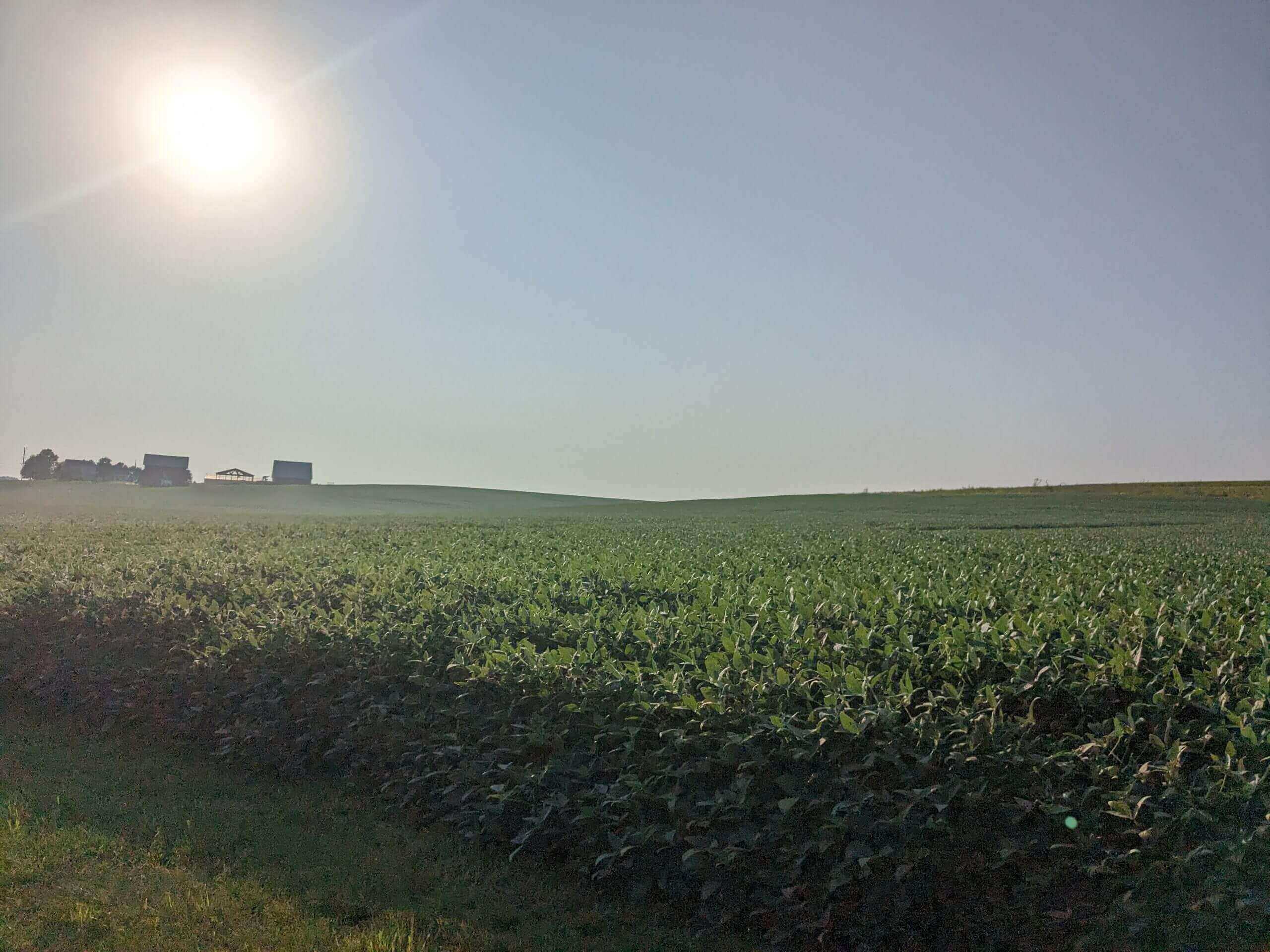
Piloting innovative flood solutions in Guthrie Center, Iowa
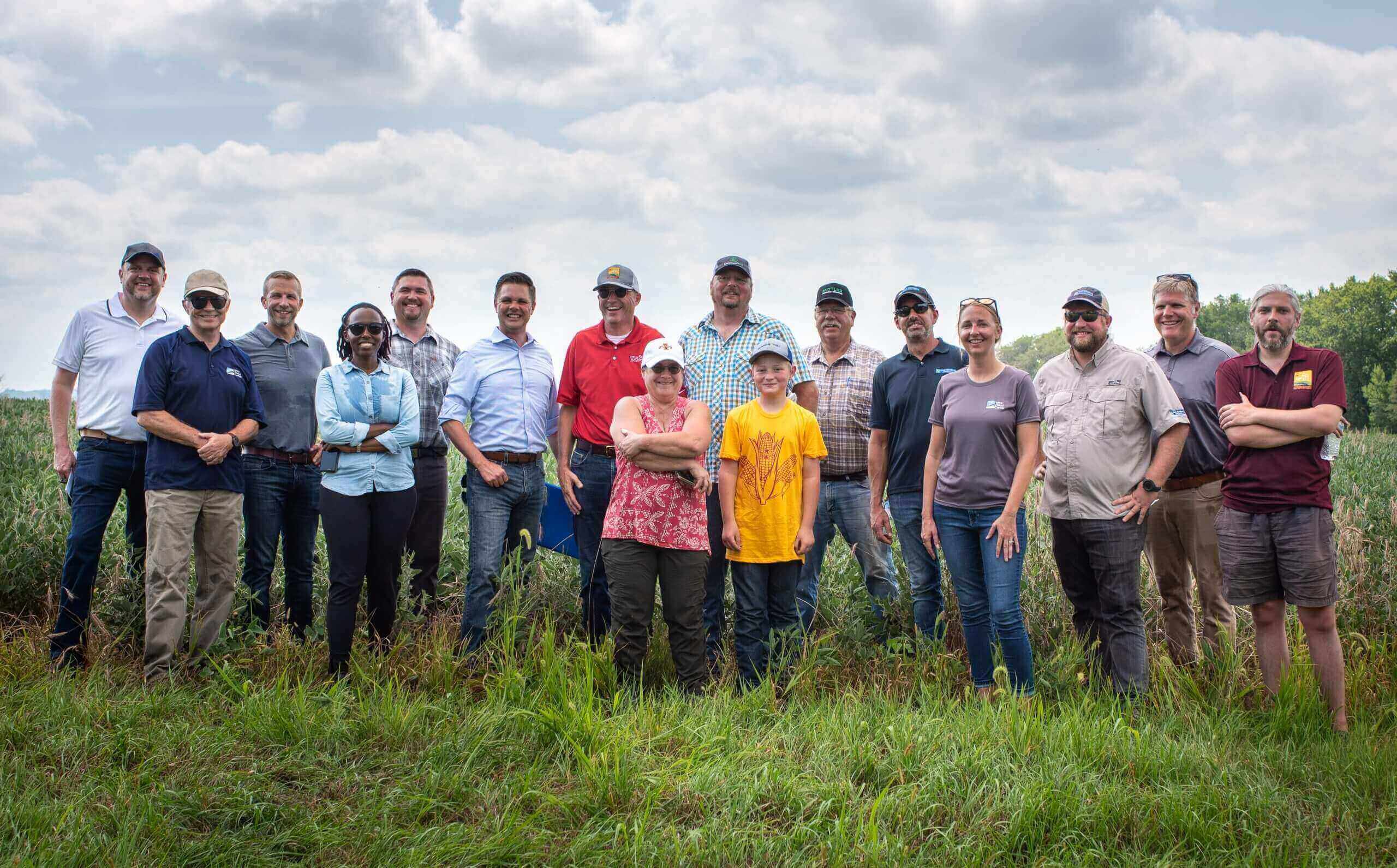
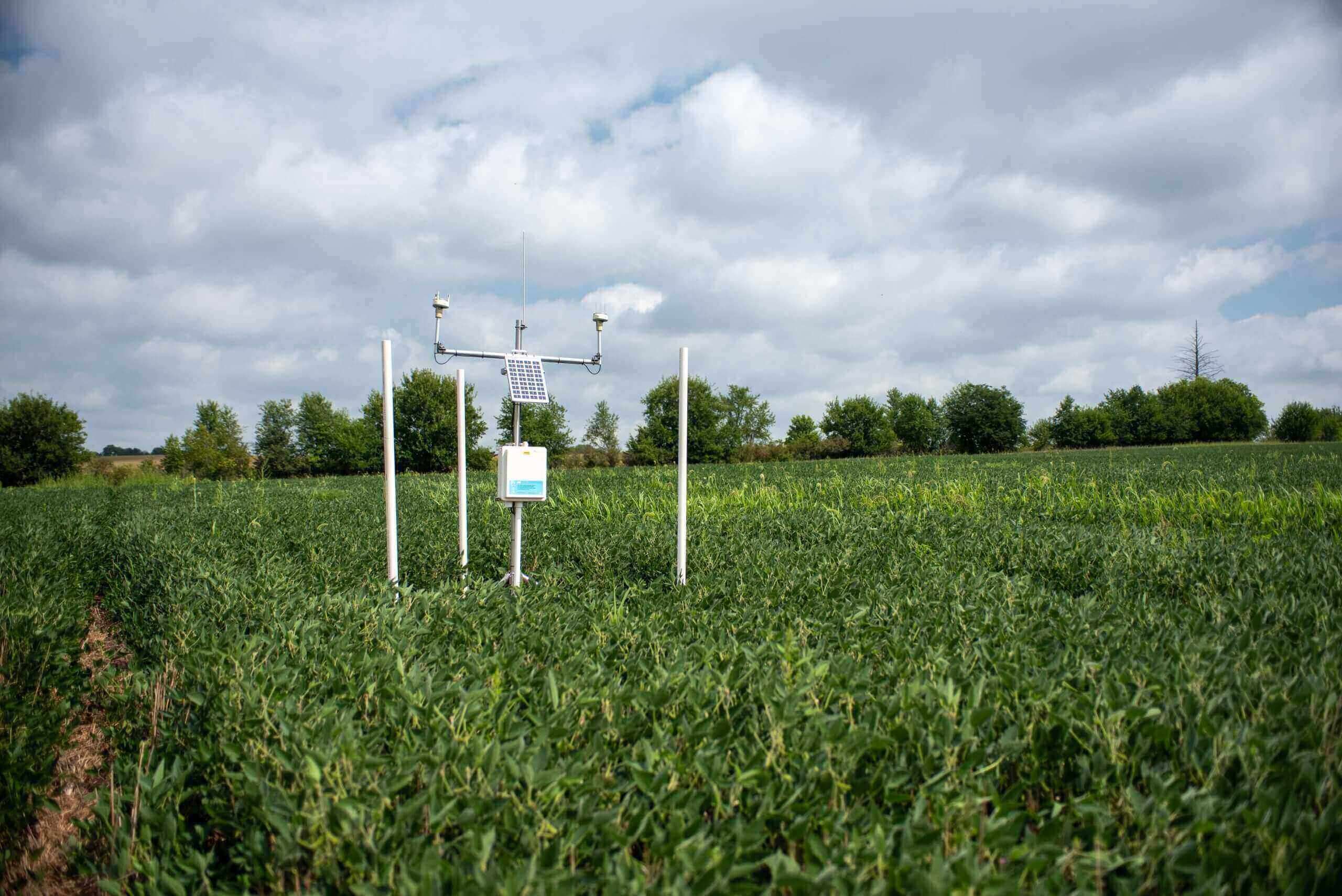
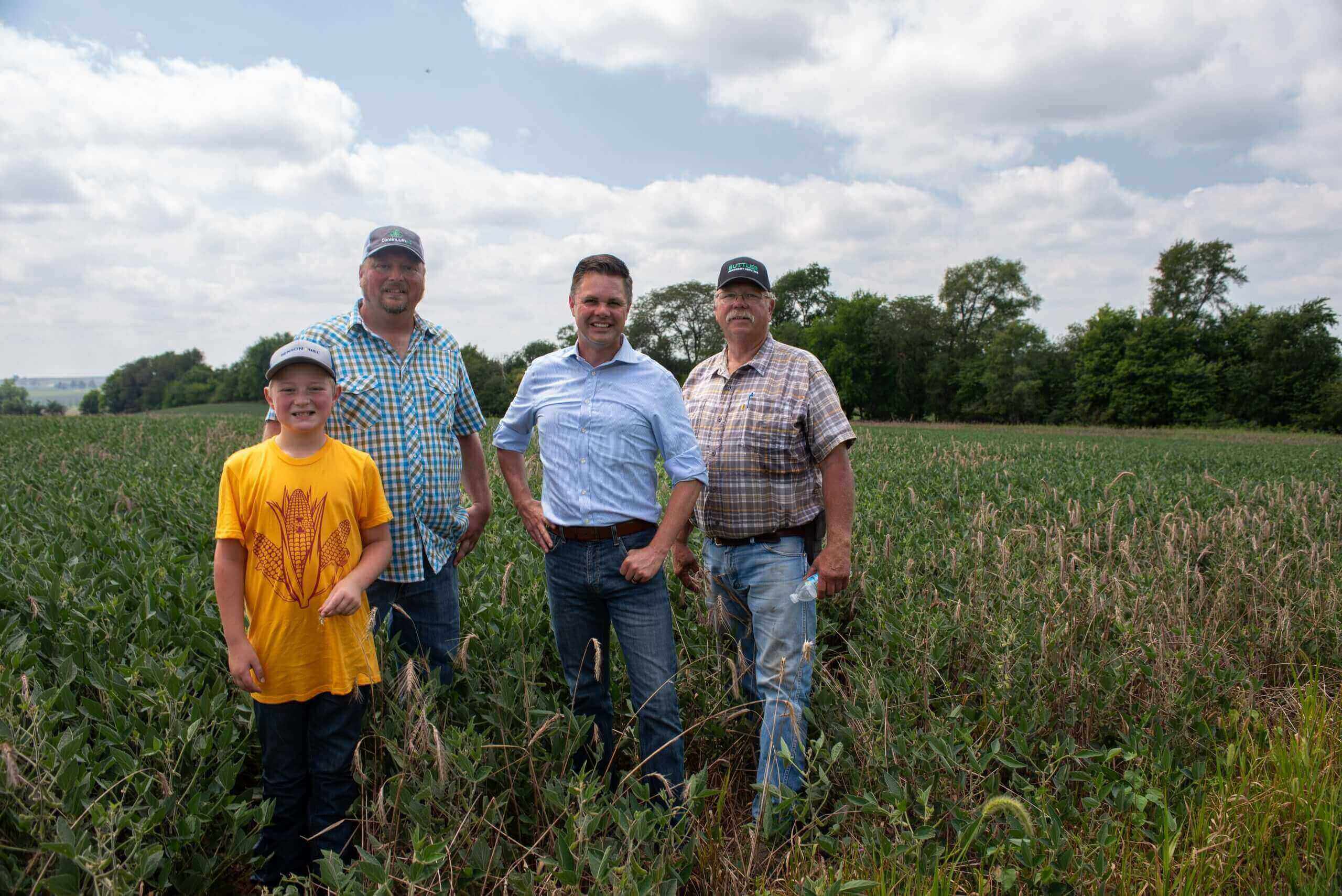
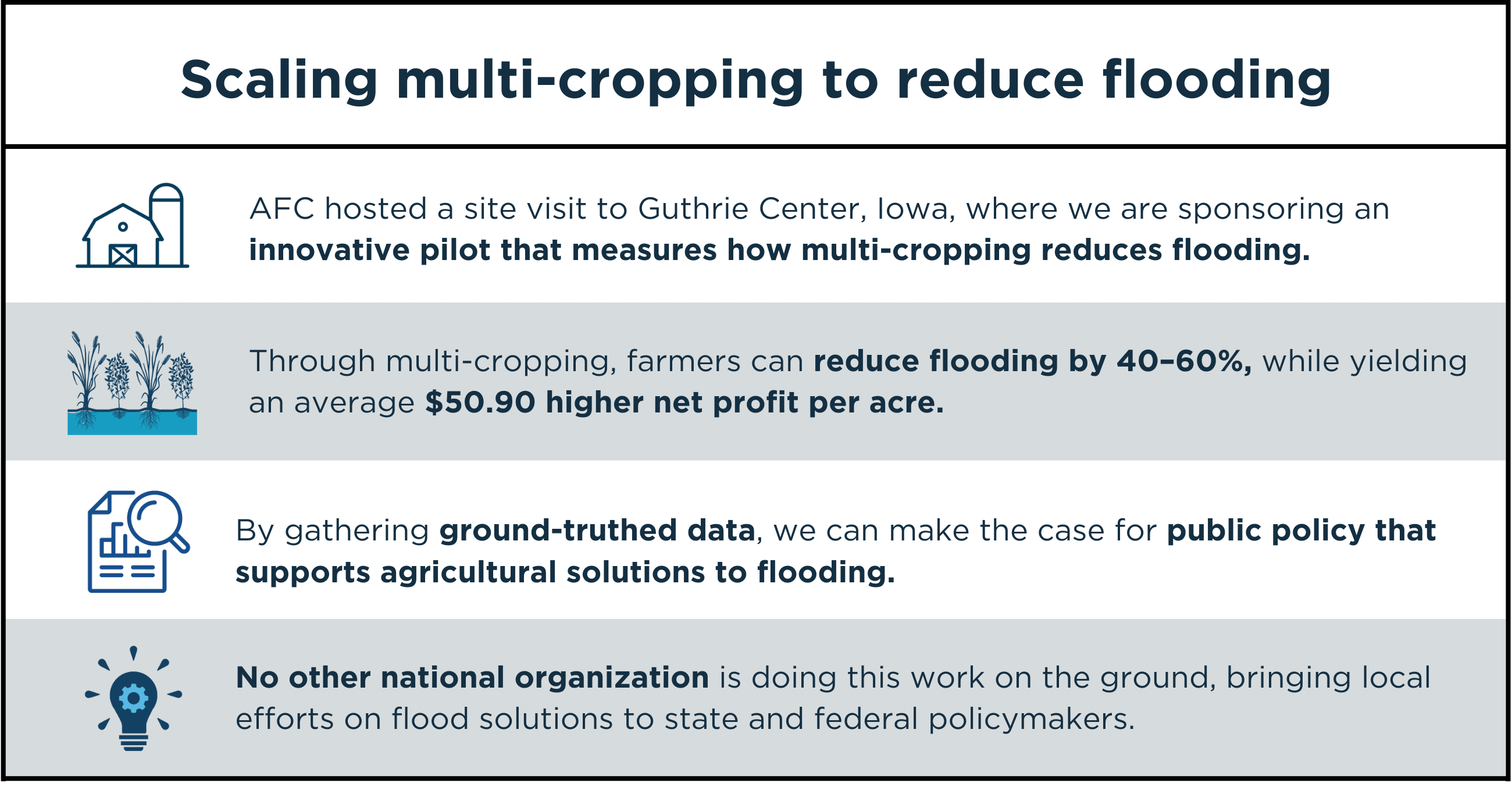
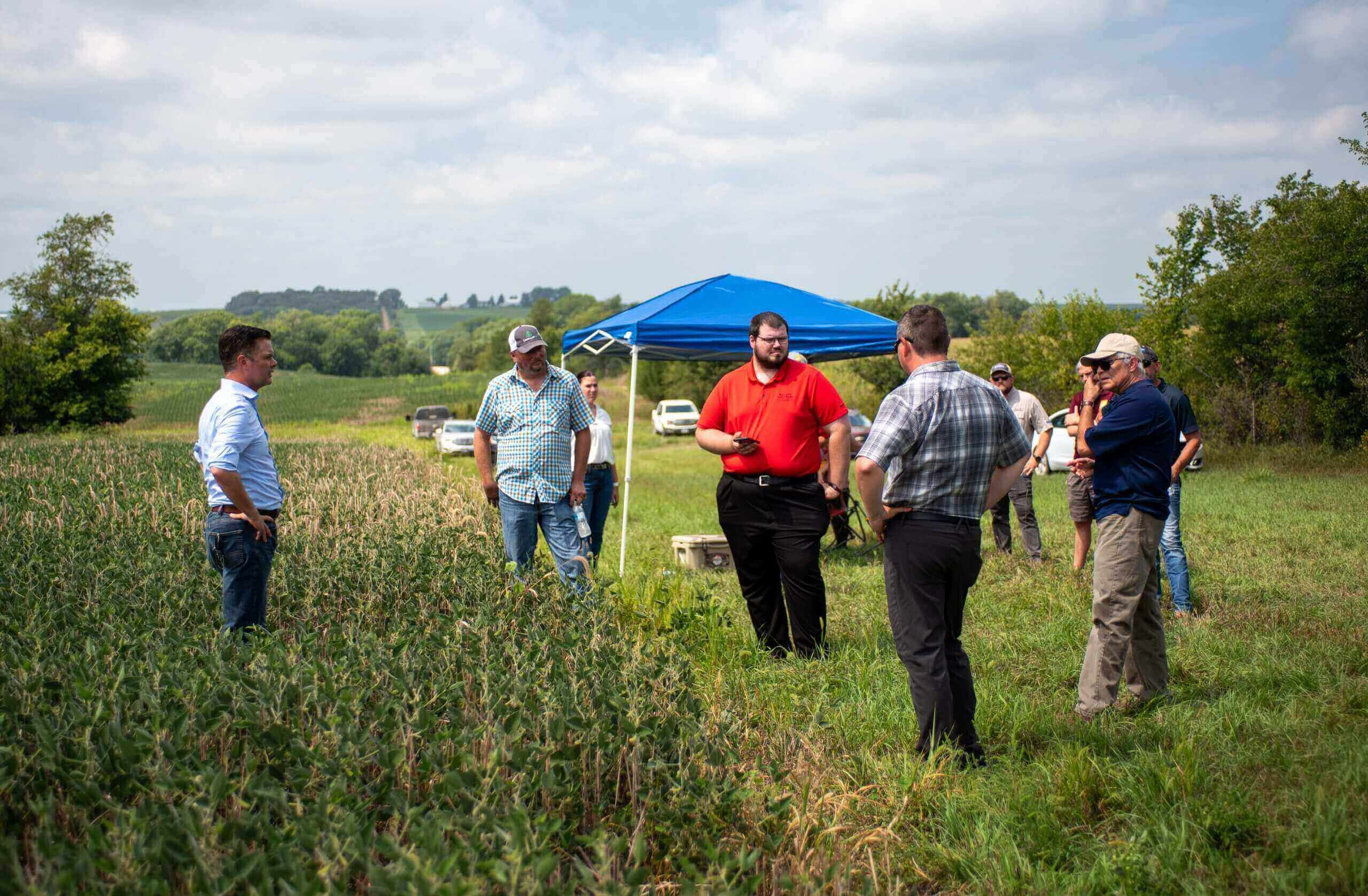
This month, the American Flood Coalition continued building on its commitment to scaling flooding and agricultural solutions. We hosted a site visit to a family-owned farm in Guthrie Center, Iowa, where local partners are carrying out an innovative project to reduce flood risk on working lands.
This project is part of AFC’s first-of-its kind work to measure the flood reduction benefits of multi-cropping, a pilot that began in 2020 when we partnered with FLOLO Farms in West Union, Iowa, and Northeast Iowa Resource Conservation & Development.
The project measures how farmers can reduce flood risk through multi-cropping — a regenerative agriculture practice in which farmers plant different crops with overlapping growing seasons in the same field. Multi-cropping also enhances and sustains the health of the soil by better absorbing water and restoring its organic content, which in turn improves productivity.
For the last three years, we’ve been collecting data on flood protection, soil health, profitability of multi-cropping, which has informed our recommendations for policy. This second pilot shows how we can scale such a solution, while gathering more ground-truthed data, to continue to make the case for multi-cropping.
While early evidence suggests that this practice reduces flooding in a cost-effective way, multi-cropping rarely comes up in conversations about flooding. Alternatively, flooding rarely comes up in conversations about multi-cropping.
AFC hopes to change that by scaling multi-cropping projects across Iowa and beyond, eventually enacting changes to federal policy that incentivizes such innovative flood solutions.
The findings for the projects so far have been promising. By multi-cropping a small grain (like cereal rye or winter wheat) and soybeans, farmers can reduce flooding by 40–60%, while yielding an average $50.90 higher net profit per acre (compared to just growing soybeans). The solution also improves soil health, further extending the resilience and profitability of farms.
Turning local voices into national solutions
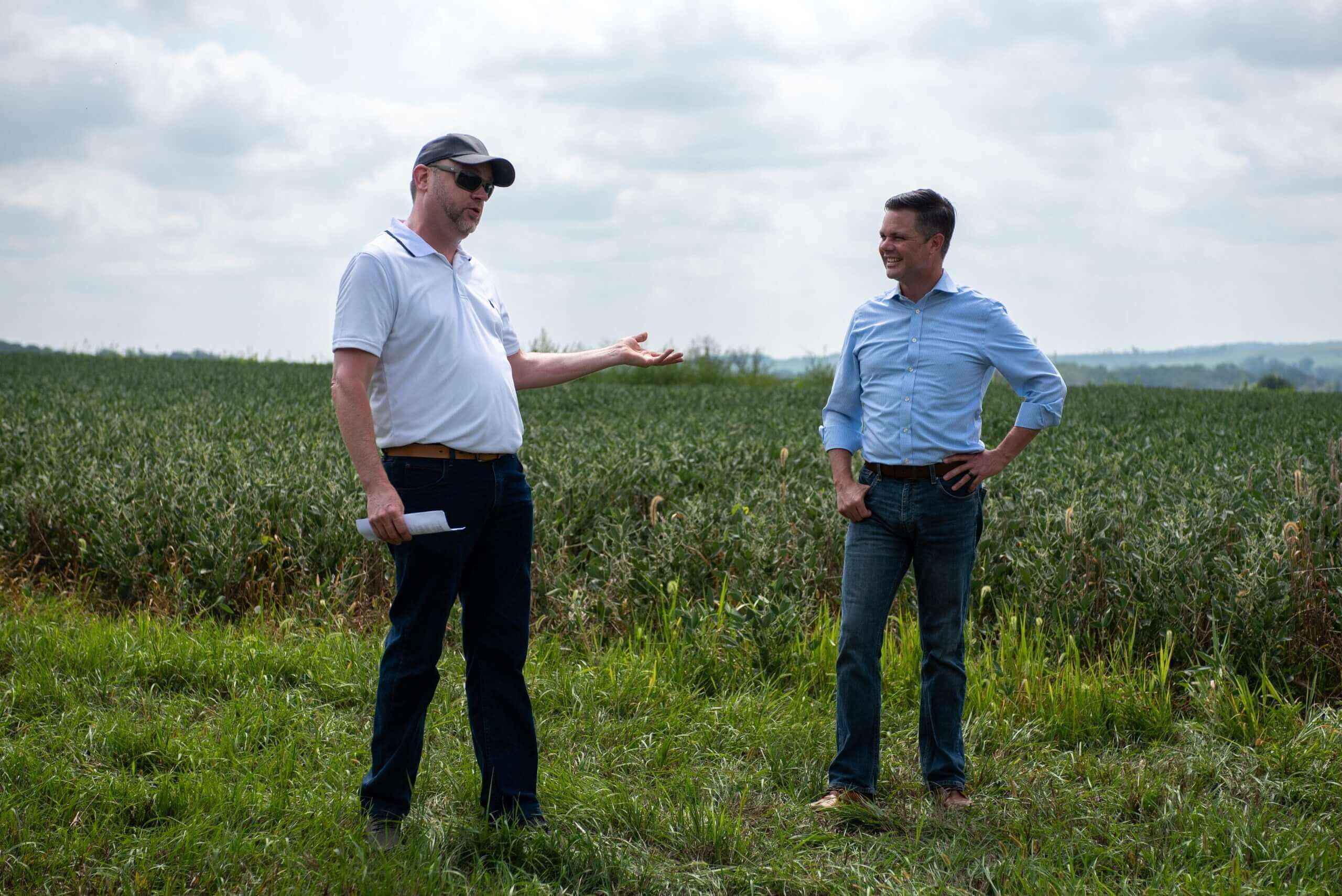
As an organization that works at the local, state, and federal levels, the American Flood Coalition is uniquely positioned to elevate local voices and bring this innovative flood solution to the national stage.
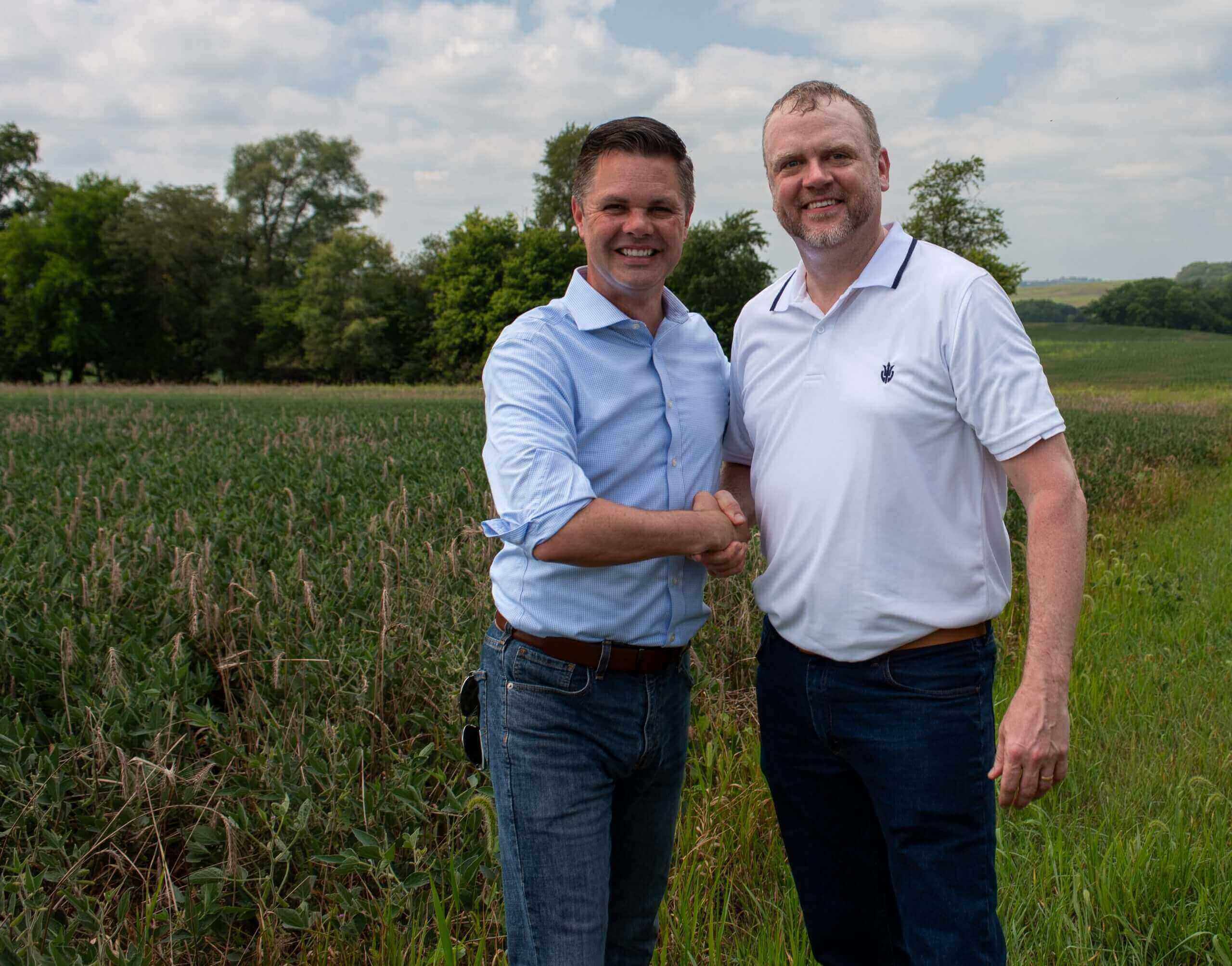
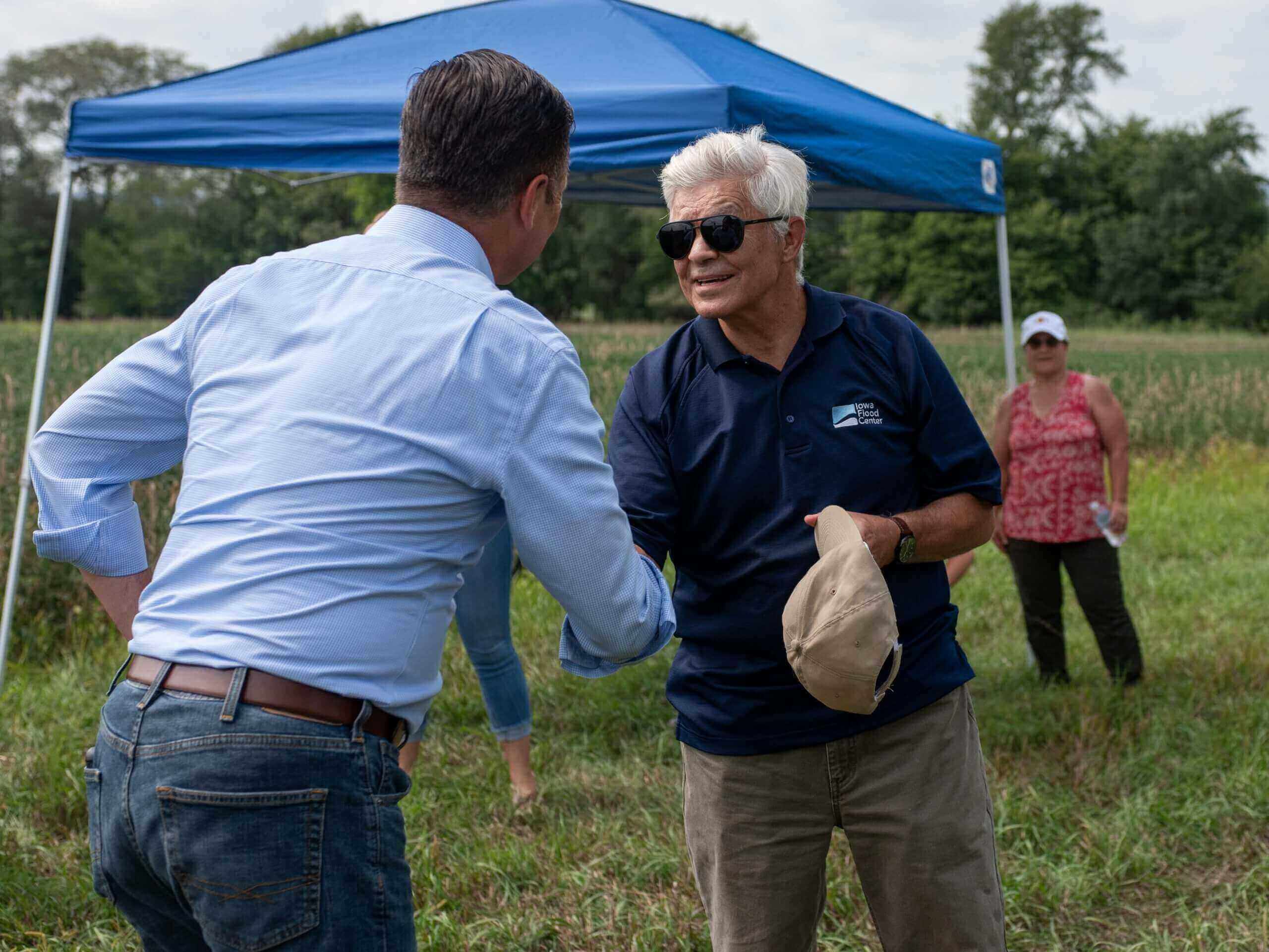
With that in mind, we invited to Guthrie Center local farmers, researchers, and practitioners, alongside federal leaders — notably, Congressman and AFC Federal Champion Zach Nunn, who represents the district that comprises Guthrie Center. At the event, he stressed the importance of multi-cropping when dealing with flooding.
“We see immediately the catastrophic effects that weather can have in this area,” said Rep. Nunn. “[Multi-cropping] gets us where we need to be so we’re not taking out tens of billions of dollars in cleanup, if we can do more on the front end to make [flooding] better going forward.”
We also invited representatives from the Northeast Iowa Resource Conservation & Development, which selected the site and collects and manages the flood data, and the Iowa Flood Center, which analyzes the data collected.
The event came at a time when Iowans are increasingly concerned about flooding. A survey conducted this summer finds that flooding is an issue that Iowa voters want to see addressed and think is not getting the attention it deserves: While nine in 10 Iowans say elected officials should care about flooding issues, only four in 10 believe they actually do care.
Scaling agricultural solutions
The next step is ensuring that solutions like multi-cropping are supported by state and federal policy. That’s why the American Flood Coalition recently developed 10 policy proposals to include in the upcoming Congressional Farm Bill.
Notably, we are working to ensure that federal programs related to agriculture consider flooding, and the Farm Bill offers a great opportunity to do that — using federal funds for innovative solutions that empower farmers, improve soil health, and boost flood resilience.
Already, movement on flood solutions is being made at the federal level. Rep. Nunn, along with Reps. Don Davis (NC), Marc Molinaro (NY), and Abigail Spanberger (VA), introduced the Flooding Prevention, Assessment, and Restoration Act of 2023.
This bipartisan proposal would tackle obstacles that limit access to disaster recovery programs, enabling agricultural producers and rural communities to lead on innovative solutions that address flooding at a watershed level.
Flood solutions — carried out by farmers, for farmers
With support from the state and federal level, multi-cropping is a simple and effective flood solution that empowers farmers directly — helping them avoid the damages from losses, while carrying out a natural solution that benefits soil health without interfering with their harvest.
No other organization is doing this type of work on the ground, bringing local efforts on flood solutions to the state and federal policymakers. By measuring the impacts of multi-cropping on flood risk, we can make the case for public policy in support of agricultural solutions to flooding.
Just as importantly, we can change the conversation about flooding and agriculture and together make both communities and farms more resilient.
—
More photos from the event in Guthrie Center, Iowa