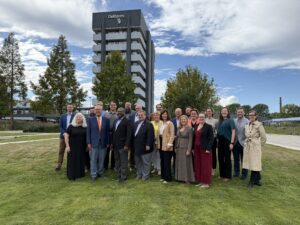


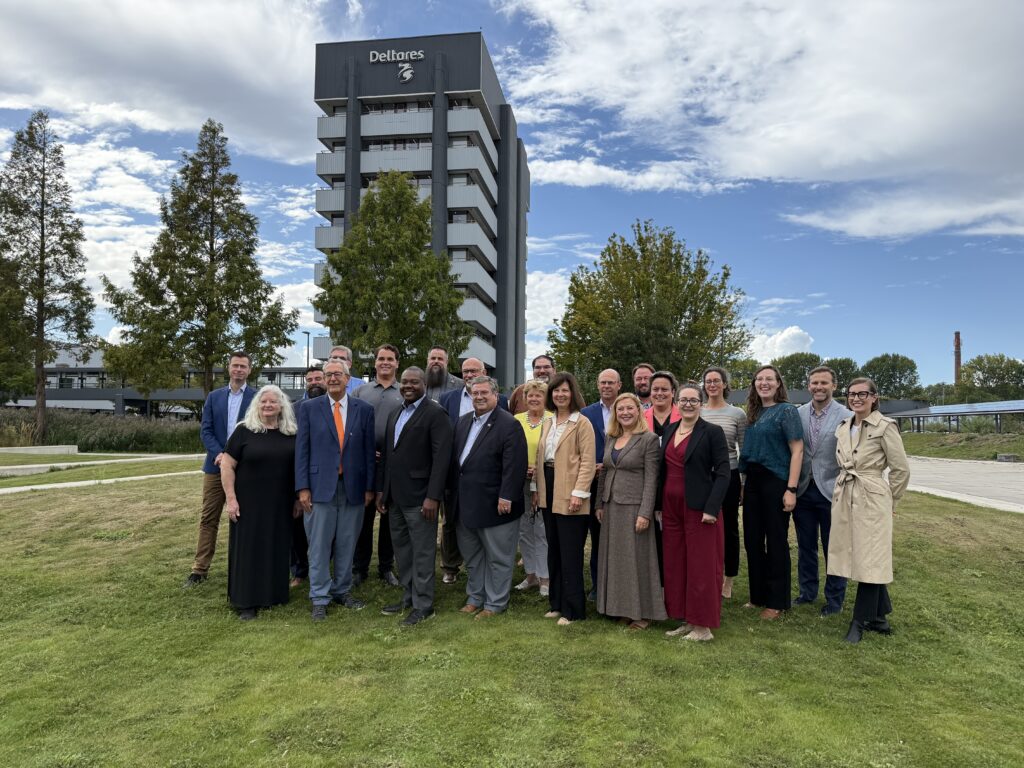
In September, the American Flood Coalition, in partnership with CSG Midwest, led a bipartisan delegation of 14 state legislators from 11 states to the Netherlands to study the country’s approach to managing water and protecting communities from flooding. Most of the Netherlands is below sea level, and the Dutch have spent centuries pioneering innovative flood-abatement solutions, from the widespread construction of artificial dykes to innovative new test facilities. The country’s blend of natural and engineered solutions—combined with long-term planning and smart investments—has helped keep people safe and the economy strong.
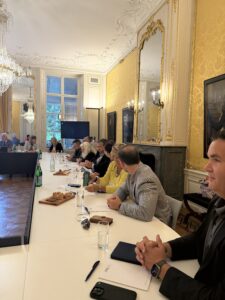
Delegates met with Dutch leaders, scientists, and engineers over five days. They toured some of the world’s most advanced flood protection systems, including the Maeslantkering storm surge barrier, one of earth’s largest moving structures. The opportunity allowed these leaders to connect with and learn from each other while identifying solutions to flooding, including funding, planning, data, and water management.
Representing a diverse cross-section of state legislators, the delegation included six state senators and eight state representatives. The cohort included lawmakers serving on Natural Resources, Appropriations, Agriculture, and Environmental Affairs committees in their respective state chambers.
A blend of nature and engineering
Delegates engaged in high-level briefings on topics such as the Delta Works Project and met with senior Dutch officials. Through tours and briefings at Deltares, a leading Dutch engineering firm, delegates examined how data can guide risk-informed decision-making with tools such as Deltares’ FloodAdapt and the Delta Flume test facility.
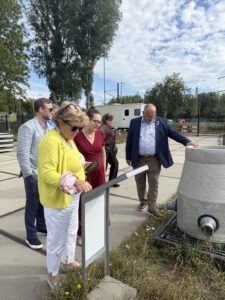
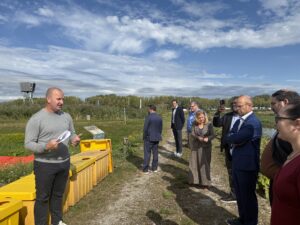
In Rotterdam, delegates learned about innovative approaches in urban resilience. Following a welcome by Rotterdam Mayor Carola Schouten, there were presentations on how the city uses creative stormwater management systems to reduce flooding in urban neighborhoods. They also toured Delft Technical University’s Green Village lab and Flood Proof Holland facility, which included demonstrations of sustainable urban innovation and temporary flood protection solutions.
Delegates explored nature-based solutions, including coastal protection in Katwijk. There was also information about projects associated with the Room for the River Program, which provides more space for waterways to flood naturally by excavating existing floodplains and moving dikes. Through site visits and briefings, the group gained a deeper understanding of how nature-based systems can be integrated with flood defenses.
Preparedness as policy
Ultimately, the delegation reinforced the importance of preparing before disaster strikes and how much we can learn from proven solutions. The Dutch have achieved resilience through long-term vision, consistent investment, and a willingness to leverage both hard and natural infrastructure. They have learned to live with water, not fight it.
As the largest team working on adaptation across local, state, and federal levels in the United States, the American Flood Coalition is in a unique position to host convenings like this, connecting state leaders with international resources, guidance, and contacts.
The American Flood Coalition looks forward to strengthening the partnerships and relationships made during the delegation trip and supporting communities as they build long-lasting flood resilience. The lessons from the Netherlands offer inspiration for how states can better plan for, fund, and manage flooding.