

November 28, 2022
—
Dubuque is one of Iowa’s oldest river towns, with commerce, industry, and recreation all tied to its access to the Mississippi River. But as much as the city depends on water, it also needs to keep water out.
The city of 60,000 frequently experiences flash floods, which can flood streets and overwhelm sewers and stormwater systems. And after an especially brutal storm in the late 1990s, the city knew it needed a long-term solution to its flooding.
“We used to get street flooding where there could be three and half to four feet of water in the street, with cars floating and motorists stranded,” said Deron Muehring, a civil engineer with the city. “There was a rainstorm in 1999, a presidentially declared disaster. We couldn’t ignore it. There was an outcry from citizens.”
One solution was the Bee Branch Watershed Mitigation Project, a creek and greenway 20-plus years in the making. The project is designed to absorb and direct excess rainfall, even during the worst storms.

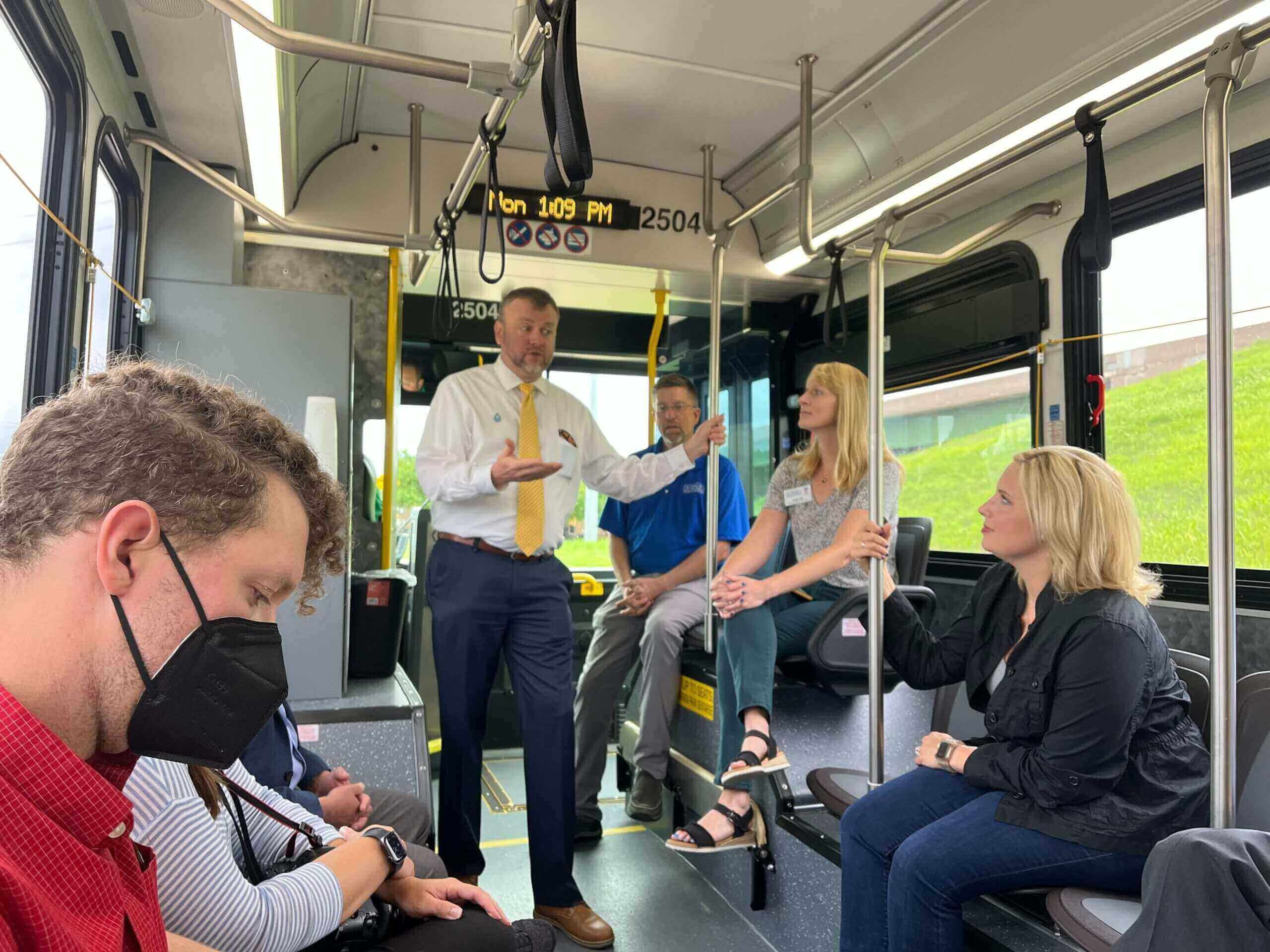
In August, the American Flood Coalition brought together leaders from the local and federal levels on a tour that included a visit to the Bee Branch Watershed Mitigation Project. That tour included Congresswoman Ashley Hinson, Dubuque Mayor Brad Cavanaugh, and staffers from the offices of Sens. Joni Ernst and Chuck Grassley, as well as representatives from the Iowa Flood Center. The visit demonstrated how the city addressed flash flooding, while also creating a public space for residents to enjoy.
The Bee Branch Project’s main component is an open-air creek that serves as both a flood channel and a community park, winding east through Dubuque neighborhoods and business districts before funneling excess water into the Mississippi River. Spanning 6.5 square miles, the Bee Branch Watershed is one of the most impactful watersheds to focus on for a flood project: Over half the city’s population works or lives in the watershed.

Practically, the project is designed to withstand a 500-year rainstorm — a storm that has a 1 in 500 chance to occur in a single year — or up to 5.6 inches of rain over two hours.
Muehring has been involved in the project from its very beginnings. But completing a project so big and expensive is no easy task. He stressed the importance of community engagement and buy-in.
“Anything that happens to that watershed affects a lot of people,” said Muehring. “Getting citizens involved and keeping them part of the process is really important.”
The city had a citizen advisory committee that recommended the site of the creek — the daylighting of an underground sewer that stretched under or near dozens of properties and businesses — which the city council ultimately adopted before eventually buying out properties.
Though some initially pushed back on the project, especially those whose homes would be bought out, the public designs of the creek and landscaped parkway in the city’s plans allowed these same citizens to envision a future community space that could protect against flooding.

The design also showed how the project could serve as a beautiful centerpiece of the city: In addition to the open-air creek and park, the project includes a trail, scenic overlooks, an outdoor amphitheater, and a boardwalk.
Also key to the project was communicating the wide-ranging benefits to both the public and potential state and federal partners. The city had a plan that it constantly adjusted, organizing the project in phases so that the city could always be ready to apply for smaller chunks of federal or state dollars when they became available.

Such a project can be a model for similar-sized cities dealing with their own flooding challenges. By learning from Dubuque’s focus on community engagement, creative approach to funding, and emphasis on the multiple benefits of flood projects, cities across the country can start planning their own flood projects.
“One thing that can be learned from this is that if you have a problem, it’s really an opportunity,” said Muehring. “By taking steps to address this problem head on, what we ended up with is a very special place that both local citizens and regional citizens can enjoy.”
—
This post was authored by Brandon Pytel, AFC Communications Associate.