


As Maryland faces stronger storms and more frequent flooding, Rep. Olszewski commits to leading on flood solutions.
WASHINGTON, DC — April 17, 2025 — The American Flood Coalition (AFC) today recognized Congressman Johnny Olszewski (MD-02) as a Federal Champion for his leadership, public service, and commitment to finding solutions to challenges posed by flooding.
“Throughout my time as public servant in Maryland and Baltimore County, I have made strengthening resilience one of my top priorities,” said Rep. Olszewski. “As a Federal Champion, I am excited to work with AFC to continue advancing common-sense solutions that protect communities along the Chesapeake Bay and across the country from flooding and other disasters.”
Rep. Olszewski joins 52 bipartisan AFC Federal Champions, those members of Congress dedicated to advancing solutions to stronger storms and more frequent flooding. Rep. Olszewski joins Rep. Sarah Elfreth as the second Federal Champion representing Maryland.
“Having served Maryland communities at the local and state levels, Representative Olszewski brings a valuable perspective as AFC’s newest Federal Champion while deepening our collaboration with stakeholders across the Chesapeake Bay,” said Melissa Roberts, Executive Director, American Flood Coalition. “We look forward to working together to deliver proactive resilience solutions for his constituents and communities across the country.”
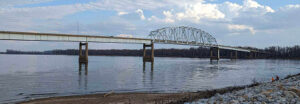
During his tenure as Baltimore County Executive, Rep. Olszewski prioritized resilience including the creation of a Resilience Authority to identify projects aimed at reducing flooding and mitigating climate impacts. He also helped lead local government response to the tragic collapse of the Francis Scott Key Bridge, coordinating closely with federal, state, and local partners to support recovery efforts.
In Congress, Rep. Olszewski serves on the House Foreign Affairs and Small Business committees and is a Member of Sustainable Energy and Environment Coalition (SEEC) and the Chesapeake Water Shed Taskforce, where he continues to advocate for federal resilience policy and programs. Through his involvement in these spaces, he will be an advocate for solving the climate crisis — a crisis which is closely linked to destroying resiliency and sustainability of homes across the country.
About the American Flood Coalition
The American Flood Coalition is a nonpartisan group that brings together cities, elected officials, military leaders, businesses, and civic groups to drive adaptation to higher seas, stronger storms, and more frequent flooding. The Coalition advances solutions that support flood-affected communities and protect our nation’s residents, economy, and military installations. AFC has over 470 members across 22 states, as well as 53 Federal Champions. For more on the organization’s work or how to become a member, visit floodcoalition.org.
About Federal Champions
The American Flood Coalition is an IRS Section 501(c)(3) non-profit organization. The American Flood Coalition is not a Congressional Member Organization, nothing on this website shall be read to imply official sponsorship by either the U.S. House of Representatives or the U.S. Senate or any of their respective Members, and Federal Champions have no membership obligations or fiduciary responsibilities with respect to the American Flood Coalition. Federal Champion is an honorary title awarded by the American Flood Coalition to recognize Members of Congress who have come together to drive adaptation to the reality of higher seas, stronger storms, and more frequent flooding.