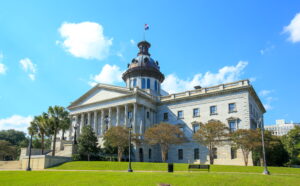


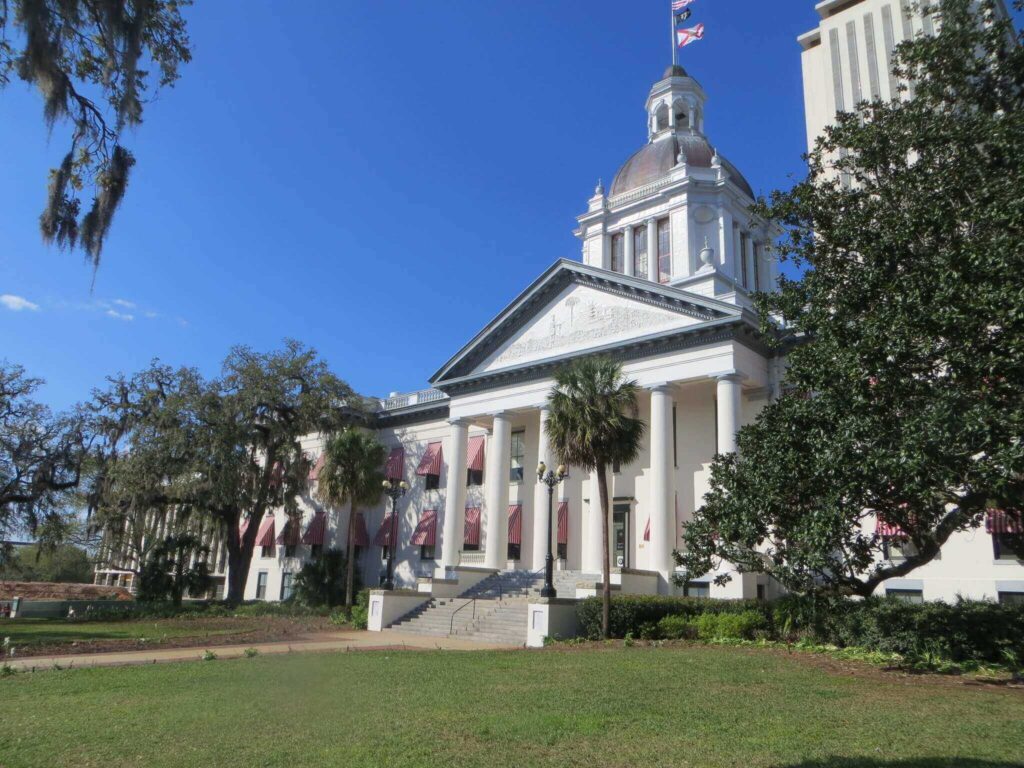
Florida State Capitol from the front

What’s in Florida’s new resilience package

March 21, 2022

Updated: On May 3, 2022, Florida Gov. Desantis signed the Statewide Flooding and Sea Level Rise Resilience bill into law.  Read on to learn how the law will build resilience to flooding and sea level and rise in the state.

For Florida, higher seas, stronger storms, and more frequent flooding is not the distant future. It’s already happening. 

Last year, the state took big steps to address this reality with the passage of the landmark “Always Ready” legislation, sponsored by Rep. Demi Busata Cabera and Sen. Ray Rodrigues and championed by Speaker Chris Sprowls. 

This month, elected officials in the Sunshine State, recognizing more must be done, overwhelmingly passed the Statewide Flooding and Sea Level Rise Resilience bill (HB 7053/SB 1940)

The bill, which permanently establishes a statewide resilience office and creates the official position of Chief Resilience Officer, is sitting on the desk of Gov. Ron DeSantis for signature to become law. The American Flood Coalition was proud to provide input on the drafting of this legislation. 

“States like Florida continue to take concrete action to decrease the impact of existing flooding, while adapting to future flood risk,” said AFC Executive Director Melissa Roberts. “The American Flood Coalition is proud to work with and be a resource for leaders that wish to address flooding and sea level rise challenges in their communities.”

Notably, the bill, once signed into law, will do the following: 

  • Establish a permanent statewide resilience office and create the official position of Chief Resilience Officer under the Executive Office of the Governor. Florida is one of 10 states with such a position. 
  • Require the Department of Transportation to create a resilience action plan for the state’s highways and other projects, which would include priorities, costs, and timelines. 
  • Require the Florida Flood Hub for Applied Research and Innovation to serve as a tidal and storm surge flooding data repository for local governments. The upcoming budget proposes $5.5 million for the hub’s operations.  
  • Authorize the Department of the Environment to fund pre-construction projects for small local governments. This helps communities that can’t afford the pre-development costs of infrastructure projects access funding early on. 

“Flooding affects communities of all sizes,” said AFC Florida Director Kate Wesner. “The newly available grants for pre-construction will allow smaller communities on the frontlines of flooding to scope and plan resilience projects, with an eye toward the future. This is a big missing piece of flood resilience.”

The bill comes less than one year after the landmark “Always Ready” bill was signed into law. That law already established a statewide resilience plan and budgeted at least $100 million annually toward resilience projects.

AFC worked with state leaders on both bills. Along with the well over one billion dollars in the budget dedicated to resilience funding, these bills will further establish Florida as a leader in flood adaptation and resilience. 

Credit for photo at top: David Wilson/Flickr
Facebook
X
LinkedIn

Recent News

One year after Helene: Western North Carolina leaders highlight ongoing need for resources

The Carolinas and Florida advance flood resilience during sessions

Building resilience with flood-smart agriculture

Join Our Newsletter

Name(Required)

Help Me Choose

Which characteristics is your community looking for in funding opportunities?

Disaster declaration
A Presidential Disaster Declaration unlocks a suite of federal programs that assist local governments with disaster recovery. This is a good filter for communities included in recent Disaster Declarations related to flooding.
Nature-based solutions
The program has a strong focus on providing assistance to promote a healthy ecosystem as a critical defense against flooding impacts. Eligible activities may include floodplain restoration, environmental stewardship, projects that use natural features to mitigate erosion, and living shorelines.
Encourages public-private partnerships
The program encourages or requires collaboration between government entities and stakeholders, including the private sector, to fund, develop, or implement projects.
Offers rolling deadlines
The program accepts applications on an ongoing basis with no fixed deadline.

Is your project in the planning, design, or construction phase?

Planning
The gathering of data and information regarding the extent and impacts of flooding. Eligible activities may include data acquisition, risk assessment, and environmental analysis.
Design & scoping
Covers pre-construction activities, such as defining project scope, developing technical designs, and securing funding to prepare for implementation.
Construction & implementation
Involves carrying out flood resilience projects, including building infrastructure and deploying solutions to reduce flood risks.

Are you looking for grants, loans, or technical assistance for your project?

Funding (grants)
A monetary award that does not need to be repaid. Many federal grants are reimbursable, meaning recipients must cover project costs upfront and then request reimbursement from the government.
Financing (loans)
A government-issued loan that must be repaid. These loans typically provide funding upfront, helping communities cover project costs before repayment begins.
Technical assistance
Assistance from the government in the form of services — such as project planning, engineering and design support, data analysis, training, capacity building, or collaboration through a cooperative agreement — instead of direct funding.

Some programs provide extra support for specific project types or communities. Do any of these apply to your project?

Small or rural communities
Programs that set aside funding, offer loan forgiveness, or adjust cost share requirements for communities with smaller populations.
Small or low-cost projects
Programs that offer reduced requirements for smaller projects, such as waived cost-sharing or exemptions from benefit-cost analysis.
Regional or watershed focus
Programs that support projects that take a watershed management approach or address flooding at a regional scale, requiring coordination beyond a single town or community.
Tribal communities
Programs that dedicate resources or adjust cost share requirements specifically for tribal governments or organizations.