

December 19, 2022
—
This year again highlighted the importance of flood resilience in our communities. With historic flooding in the middle of the country, alongside devastating hurricanes in Florida and the Southeast, 2022 showed the need for flood solutions across the country.
Despite these challenges, we are headed in the right direction. This year, we saw the federal and state governments build on historic levels of investments. And we saw some of this funding begin to make it to communities on the frontlines of flooding.
As the year ends, we look back on achievements in flood resilience.
Coalition milestones

300 members
This year marked a member milestone for our coalition: We grew to 300 members across 21 states. We also added our 100th local government member.
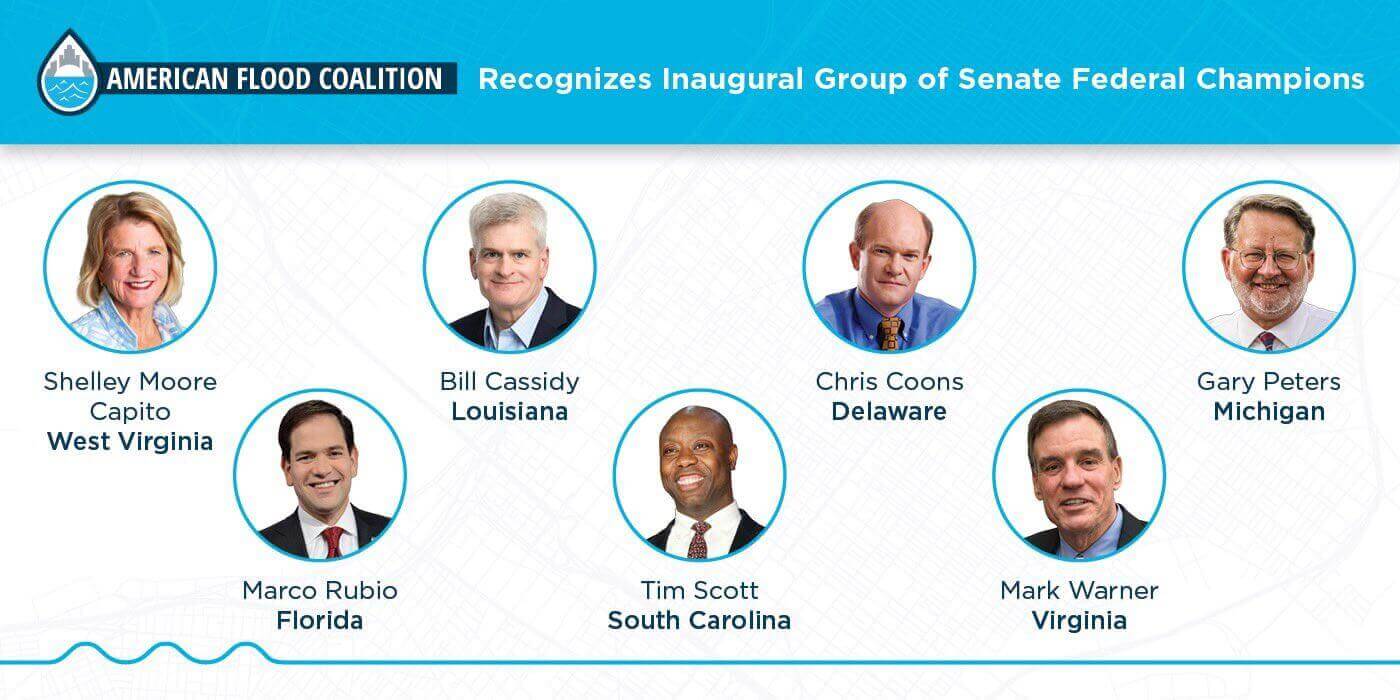
Senate Federal Champions
This year, we announced our first Senate Federal Champions, who joined over two dozen bipartisan Federal Champions in the U.S. House of Representatives. Recognized for their leadership, public service, and commitment to finding proactive solutions to the challenges posed by flooding, Sens. Shelley Moore Capito (WV), Bill Cassidy (LA), Chris Coons (DE), Gary Peters (MI), Marco Rubio (FL), Tim Scott (SC), and Mark Warner (VA) will inform and enhance our Coalition’s work in both chambers of Congress.
New Directors
We added several new positions this year, including a trio of firsts — Carolinas Director, Texas Director, and Flood Planning Director — as well as a Senior Government Relations Director. Together, these positions deepen our expertise in flood planning and policy and grow our local and state-level presence.
Advocating for federal policy
FLOODS and PRECIP Acts
AFC celebrated the passage of the Providing Research and Estimates of Changes In Precipitation (PRECIP) Act and the Flood Level Observation, Operations, and Decision Support (FLOODS) Act, which will modernize and enhance federal rainfall data. This legislation was a top priority for us, as we worked with congressional offices to ensure communities have access to accurate, forward-looking rainfall data.
Driving local solutions
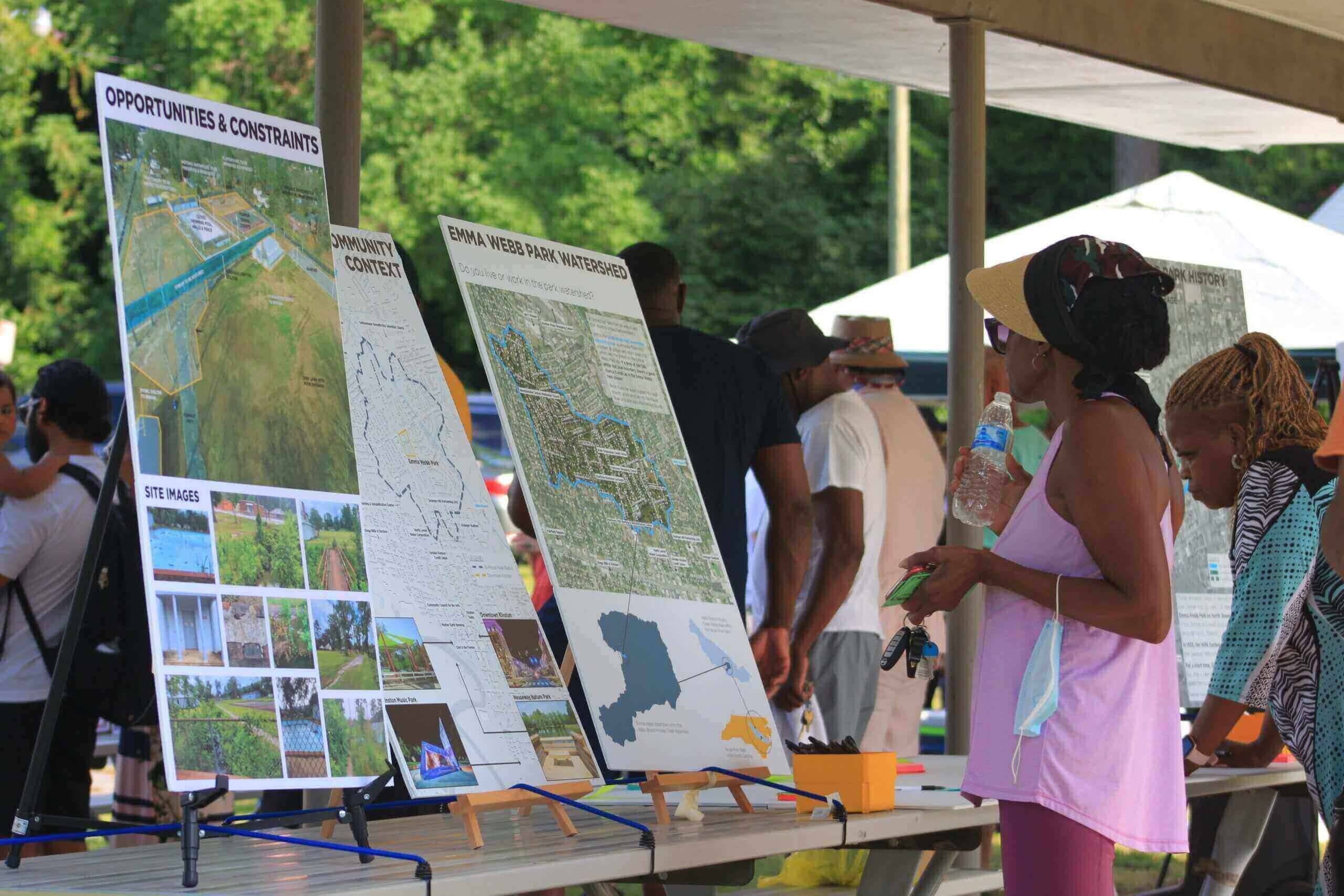
Through strong local partnerships, AFC advanced innovative pilot projects and showed how these ideas can scale to other communities:
- In Hampton, Virginia, we supported community-driven, volunteer-based improvements to a living shoreline.
- In Kinston, North Carolina, we advanced a community vision for a public park, which was used to apply for and receive a $500,000 state grant.
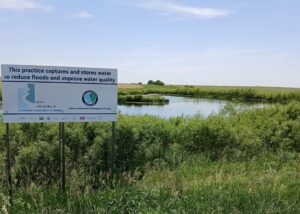
- In Northeast Iowa, we continued supporting a first-of-its-kind farming project that could reduce flooding by as much as 40–60%.
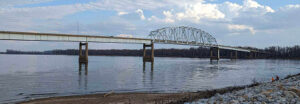
- In Dubuque, Iowa, we brought together leaders from local and federal levels on a tour of an innovative flood project.
Bringing local leaders together

Mayors Summit
We hosted our Mayors Summit on Flooding and Sea Level Rise, bringing together 23 mayors and local leaders, alongside federal experts, to explore solutions, build relationships, and drive action on flood solutions. During the Summit, we organized 21 congressional meetings, including 10 with members of Congress themselves.
The Summit continues to have a long-lasting impact: Since attending the Summit, 10 attendees have hosted local roundtables, four have joined AFC’s Member Advisory Board, and multiple mayors have organized regional meetings.
Building resilience at the state level
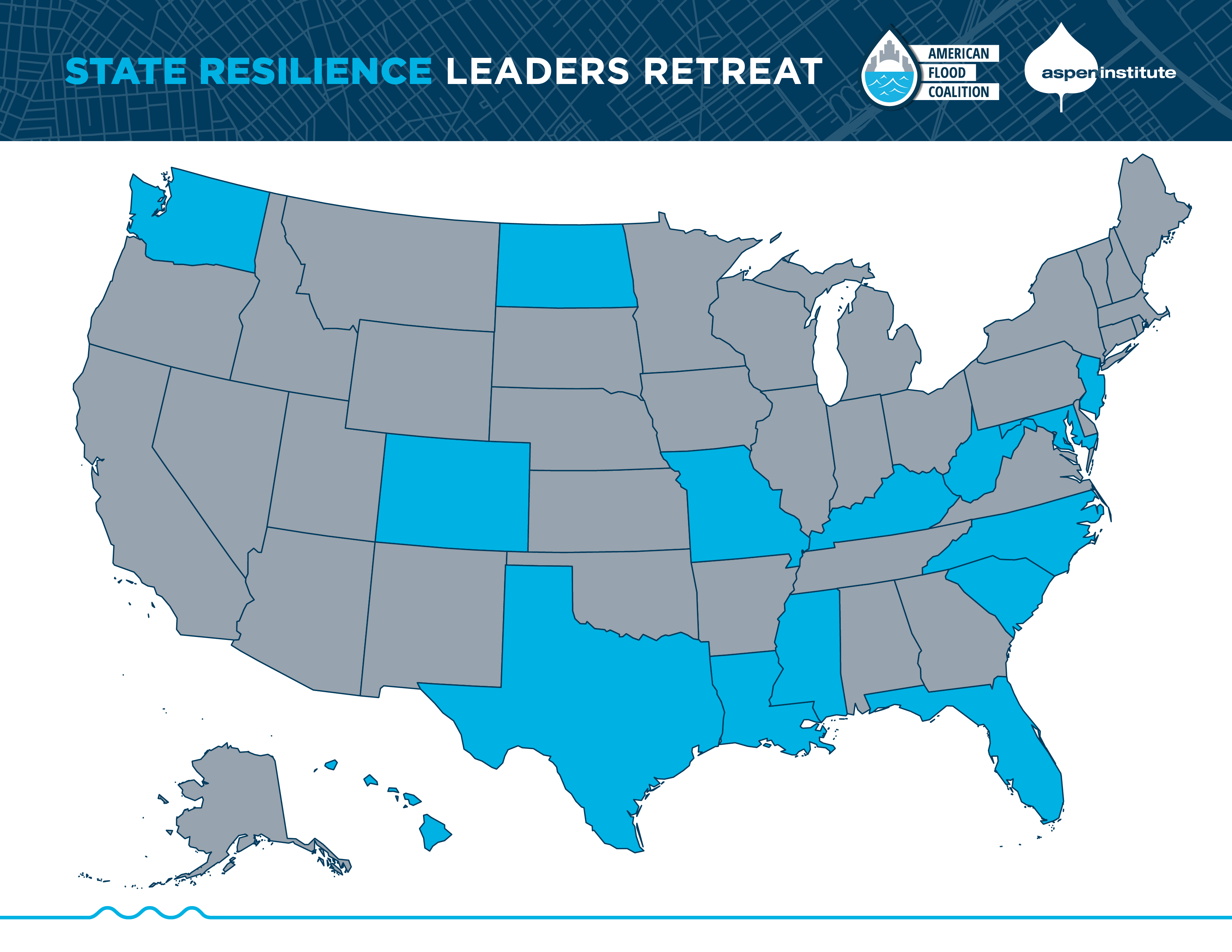
State Resilience Leaders Retreat
AFC brought together 15 chief resilience officers and other senior state resilience leaders for the first-of-its-kind State Resilience Leaders Retreat. At the three-day retreat in Aspen, Colorado, leaders collaborated across political and geographic boundaries to bring back proven, innovative flood solutions to their states, while building a lasting network.
State Resilience Partnership
The AFC-led State Resilience Partnership — a coalition of 20 organizations committed to supporting state leaders by providing tools, expertise, and curated research on flood resilience — launched new research and developed recommendations on state-level flood adaptation planning and risk assessments.
Florida’s new resilience law
AFC was proud to provide input on Florida’s Statewide Flooding and Sea Level Rise Resilience bill. The bill, which became law in May, permanently established a statewide resilience office and statutorily enshrined the position of Chief Resilience Officer.
Bringing flood-resilience tools to communities
Infrastructure law checklist
Following passage of the Infrastructure Investment and Jobs Act in 2021, we created an infrastructure law checklist to guide state and local leaders in developing strong projects, submitting competitive applications, and leveraging the law’s investments in flood resilience.
Hurricane Ian Response & Recovery
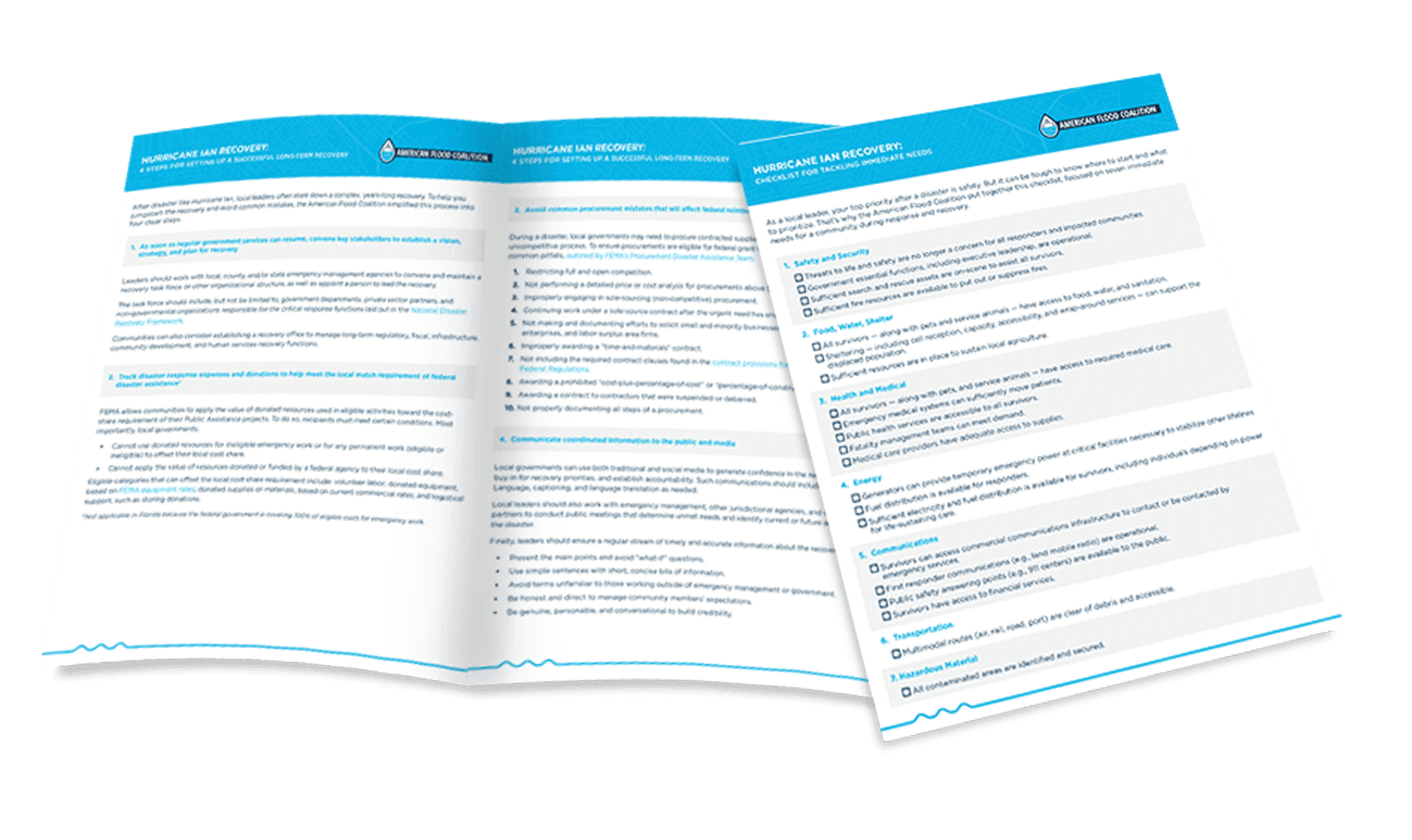
To help local leaders navigate the response and recovery phase after Hurricane Ian, we developed and shared a checklist for tackling immediate needs, steps for setting up a successful long-term recovery, and public assistance opportunities.
—
AFC is thankful for all those who supported our work and advanced and shared solutions to address flooding. We look forward to driving adaptation to stronger storms, rising seas, and more frequent flooding into 2023 and beyond.
To set up a call with a member of our staff, send us an email at info@floodcoalition.org. Meanwhile, learn more about joining the Coalition.